Recruitment | English in Academia - Instytut Pileckiego

10.09.2019 (WT)
Recruitment | English in Academia
Unique in this country, English in Academia is a hands-on English-language program for emerging scholars in the humanities and social sciences seeking to learn and practice top-level English in an international academic context.
ABOUT THE PROGRAM
The program will assist you in building and refining your scholarly persona in the global academic world. It will empower you to contribute considerably to the world with your ideas, research, and professional experience.
The purpose of the Foundation Workshops is to introduce participants to some of the key characteristics of the Anglo-American style of scholarly discourse. Through a combination of presentations by the instructor, group discussions, readings and individual tasks, participants will have an opportunity to rethink and reframe their own work within the context of an English-language academic setting, with all of the expectations this entails. The workshops are conducted in English.
Participants who want to benefit most by completing the entire Program will have the opportunity to choose three advanced workshops in the summer
semester from among a variety of specialized topics targeting the specific needs of emerging and experienced academics.
Description of English in Academia
The English in Academia program is a series of workshops aimed at Polish Doctoral students, post-Docs, professional academics and researchers who want to improve their skills in writing and speaking in the Anglo-American academic environment. Our focus is on understanding how native English speakers approach the writing and presentation of scholarly research, and how this differs from what we may be accustomed to. It is not a course in writing and speaking in English, but rather a chance to reimagine and re-present our work and ourselves within the context of a more Anglo-American oriented international community.
- Foundation I - The first Foundation session begins with a presentation of what sets the Anglo-American style of scholarship apart from other styles – how to adapt our ways of thinking, speaking, and writing, and how to use this set of discursive expectations to our best advantage.
- Foundation II - In this second session, we will expand upon our work done in the previous session, discussing how the structure of a whole work (paper, presentation or book) can be viewed as a set of strategies for presenting information and ideas in a way that builds on and develops a central argument.
- Foundation III - This workshop is intended as an introduction to the foundations of public speaking (in English): it mainly concentrates on the technical aspects of public speaking, with the emphasis on delivery and style. A shorter last part serves as an introduction to the wider and more complex issue of reconciling the various demands of good public speaking with academic content and integrity.
AVAILABLE WORKSHOPS in 2019 (for application, please select one of a kind)
Group I:
Foundation I – 21.10
Foundation II – 18.11
Foundation III – 16.12
Group II:
Foundation I – 31.10
Foundation II – 05.12
Foundation III – 13.01
HOW TO APPLY
An electronic application (in English)
should include:
• a 100–200-word bio
• a 100–200-word statement of interest in taking the Program
• a 300-word description of your current (or planned) research
• please indicate your first and second choice of group
Send your application to: englishinacademia@instytutpileckiego.pl by 17 October 2019. At the bottom of your application, please copy-paste
the authorization below to process your personal data:
“I hereby give consent for my personal data included in my application to be processed by the Pilecki Institute with its seat at Foksal Street 17, 00-372 Warsaw, for the purposes of recruitment under the Data Protection Act
of 29 August 1997 (Journal of Laws of 2016, item 922)”.
To ensure high-quality instruction and learning efficiency we can only accept a limited number of applications. For admitted applicants, the Program fees are covered by the Pilecki Institute (transport, accommodation, and meals NOT included).
Workshops begin at 10 a.m. and conclude at 4 p.m. (with a 45-minute lunch break) and are held in the Pilecki Institute’s conference room at Foksal 17 Street, Warsaw (III floor).
INSTRUCTORS
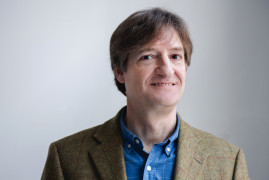
John Cornell received his Ph.D. in history from the University of Michigan, Ann Arbor, where he held a Rackham Humanities Research Fellowship, and his
B.A. in musicology from the University of California, Berkeley. His research concerns the intersection of political and social history with musical practice,
with a focus on France and the United States.
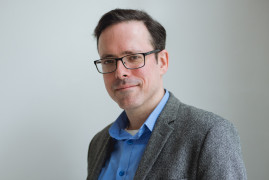
Richard Washington is a graduate in History and Social Sciences of the Universities of Oxford and London as well as Natolin College of Europe (Einstein Promotion). He holds a diploma in acting from the London Academy of Music and Dramatic Art (1997) and enjoyed a nine year long career as a professional actor, taking part in numerous theatrical tours both in the UK and continental Europe. He has been working at Natolin College of Europe since 2011 and is currently Director for Strategy there. Richard has been leading workshops in the English in Academia program since 2017.
Do pobrania
Zobacz także
- Oblicze zbrodni. Życie i śmierć Romana Szuchewycza | dr. hab. Damian Markowski
Aktualności
Oblicze zbrodni. Życie i śmierć Romana Szuchewycza | dr. hab. Damian Markowski
W związku z niedawną decyzją Lwowskiej Rady Obwodowej o ogłoszeniu roku 2027 Rokiem Ukraińskiej Powstańczej Armii (UPA), jej dowódcy Romana Szuchewycza oraz działacza Organizacji Ukraińskich Nacjonalistów (OUN) Ołeha Olżycza, publikujemy artykuł dr. hab. Damiana Markowskiego, profesora Instytutu Pileckiego, przypominający kluczowe fakty z życia i działalności dowódcy UPA.
- The Second International Congress of the Pilecki Institute: A recap
Aktualności
The Second International Congress of the Pilecki Institute: A recap
Congress “Embracing the New, Preserving the Old: Studying Fascism, Communism, and Totalitarianism in the 2020s” took place on October 14 and 15, 2026 – two packed days of stimulating papers, keynote events, debates and discussions.
- Ekspert IP: Oto „Nachtigall”, batalion, w którym służył dowódca UPA
Aktualności
Ekspert IP: Oto „Nachtigall”, batalion, w którym służył dowódca UPA
W związku z powracającą w przestrzeni publicznej dyskusją na temat batalionu „Nachtigall”, dr hab. Tomasz Chinciński, profesor Instytutu Pileckiego, przypomina kluczowe fakty ustalone przez historyków.
- „Göring patrzył na mnie bardzo uważnie” – „Sala 600. Świadkowie Norymbergi” w Berlinie
Aktualności
„Göring patrzył na mnie bardzo uważnie” – „Sala 600. Świadkowie Norymbergi” w Berlinie
17 października 2026 roku publiczność zgromadzona w berlińskim oddziale Instytutu Pileckiego wysłuchała drugiego odcinka audioserialu „Sala 600. Świadkowie Norymbergi” o Sewerynnie Szmaglewskiej.
- „Pilecki wahał się" | Karol Madaj w podcaście Muzeum Historii Polski
Aktualności
„Pilecki wahał się" | Karol Madaj w podcaście Muzeum Historii Polski
Czy Witold Pilecki podjął się najniebezpieczniejszej misji II wojny światowej? Jak trafił do Auschwitz? Czy rzeczywiście budował tam konspirację? Zapraszamy do obejrzenia podcastu Muzeum Historii Polski z udziałem dyrektora Instytutu Pileckiego Karola Madaja.
- Między znikaniem a trwaniem. Festiwal Wolskie Ostańce 2026 [fotorelacja]
Aktualności
Między znikaniem a trwaniem. Festiwal Wolskie Ostańce 2026 [fotorelacja]
Przez trzy dni (9–11 października) festiwal „Wolskie Ostańce” zapraszał do zatrzymania się i spojrzenia na Warszawę z nowej perspektywy — poprzez osobiste historie, miejsca naznaczone pamięcią oraz to, co wciąż trwa pomiędzy znikaniem a trwaniem.
- Porażka. Niemcy, Rosja i cena złudzeń | Relacja wideo z 9. spotkania Berlin w Warszawie
Aktualności
Porażka. Niemcy, Rosja i cena złudzeń | Relacja wideo z 9. spotkania Berlin w Warszawie
Jakie były źródła błędnych ocen w polityce Niemiec wobec Rosji? Których ostrzeżeń nie chciano usłyszeć i dlaczego? Jakie wnioski z tej historii wynikają dziś dla Niemiec, Polski i Ukrainy oraz dla bezpieczeństwa Europy? Dlaczego tak długo ignorowano sygnały ostrzegawcze i głosy płynące m.in. z Polski i Ukrainy? Jaką rolę odegrały w tym interesy gospodarcze, kalkulacje polityczne?
- Konferencja „Laboratoria innowacji. AI w archiwach” | Fotorelacja
Aktualności
Konferencja „Laboratoria innowacji. AI w archiwach” | Fotorelacja
30 września 2026 roku – w Dniu Archiwisty – w warszawskiej siedzibie Instytutu Pileckiego przy ul. Siennej 82 odbyła się ogólnopolska konferencja naukowa „Laboratoria innowacji. AI w archiwach”.
- Jubileusz 10-lecia Muzeum Dom Rodziny Pileckich w Ostrowi Mazowieckiej
Aktualności
Jubileusz 10-lecia Muzeum Dom Rodziny Pileckich w Ostrowi Mazowieckiej
8 października w ogrodzie Muzeum Dom Rodziny Pileckich w Ostrowi Mazowieckiej odbyło się wyjątkowe wydarzenie – jubileusz 10-lecia działalności instytucji.
- Festiwal „Wolskie Ostańce”
Aktualności
Festiwal „Wolskie Ostańce”
Co zostaje z miasta, które nieustannie się zmienia? Co trwa mimo wyburzeń, nowych inwestycji i zacierania śladów pamięci? I kim są współcześni „ostańcy”? Festiwal „Wolskie Ostańce” to wielowymiarowe wydarzenie poświęcone relacji między miastem, pamięcią i ludźmi.
- Reportaż Instytutu Pileckiego wyróżniony na 18. Międzynarodowym Festiwalu Filmowym NNW
Aktualności
Reportaż Instytutu Pileckiego wyróżniony na 18. Międzynarodowym Festiwalu Filmowym NNW
Dokument „Jedna wskazówka” o Obławie Augustowskiej, autorstwa Martyny Wojtkowskiej z Instytutu Pileckiego, otrzymał pierwsze wyróżnienie podczas 18. Międzynarodowego Festiwalu Filmowego NNW w Gdyni.
- „Spotkanie z Patronem” w Muzeum Dom Rodziny Pileckich w Ostrowi Mazowieckiej
Aktualności
„Spotkanie z Patronem” w Muzeum Dom Rodziny Pileckich w Ostrowi Mazowieckiej
6 października pracownicy Instytutu Pileckiego brali udział w „Spotkaniu z Patronem” organizowanym przez Muzeum Dom Rodziny Pileckich w Ostrowi Mazowieckiej.