The Witold Pilecki International Book Award: Bilewicz, Marat and Eristavi winners of the Institute’s 5th competition for best history book - Instytut Pileckiego

11.12.2025 (Thu)
The Witold Pilecki International Book Award: Bilewicz, Marat and Eristavi winners of the Institute’s 5th competition for best history book
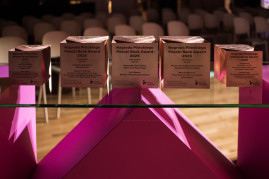
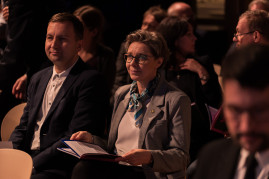
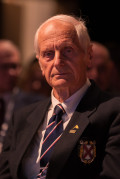
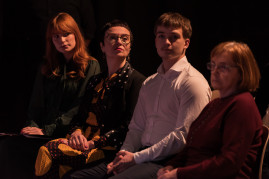
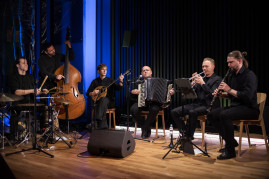
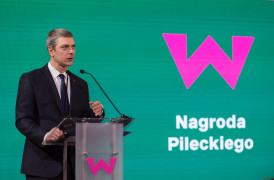
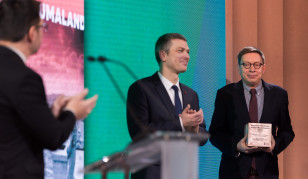
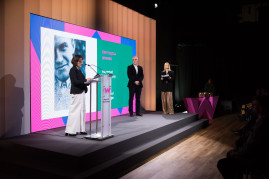
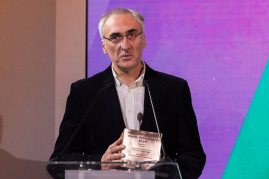
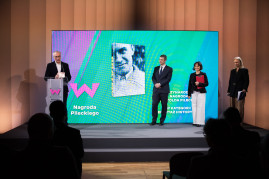
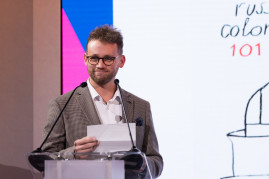
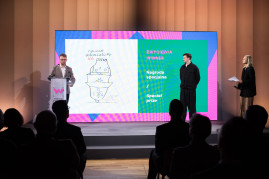
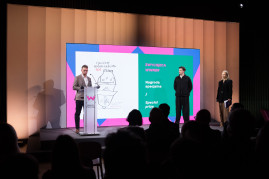
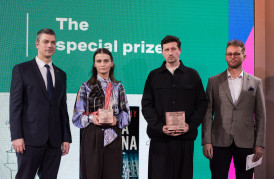
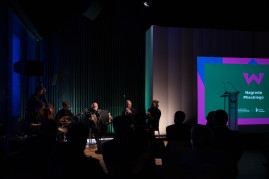
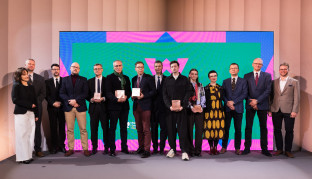
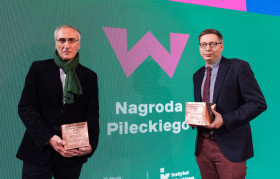
The Witold Pilecki International Book Awards were presented during a ceremony on Thursday 11 December, in the auditorium of the Pilecki Institute.
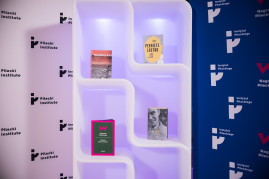
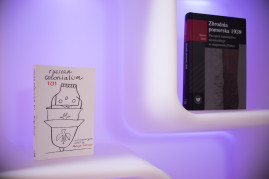
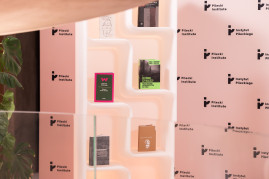
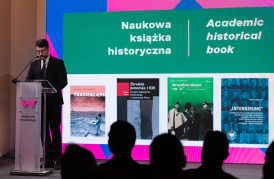
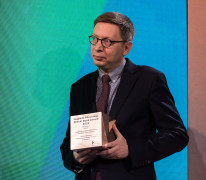
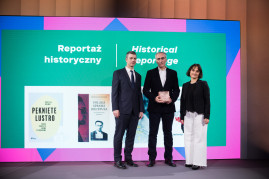
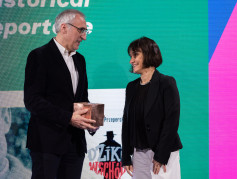
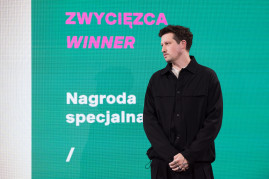
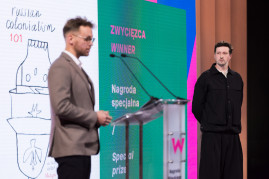
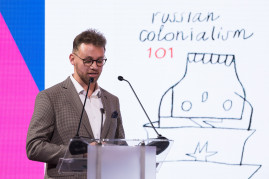
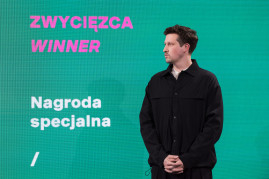
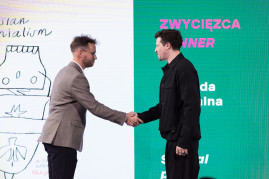
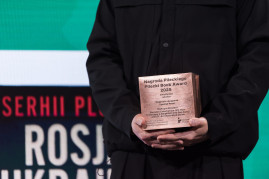
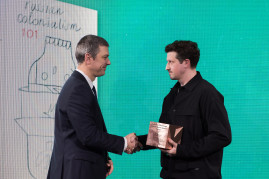
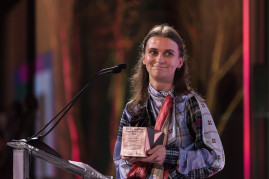
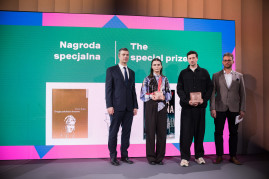
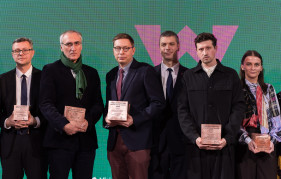
The prestigious award was presented in three categories: Michał Bilewicz’s Traumaland was recognized as the best academic history book, Emil Marat’s Bratny. Hamlet rozstrzelany received the award for the best historical reportage, and the Special Prize went to Russian Colonialism 101. How to Occupy a Neighbor and Get Away with It. An Illustrated Guide by Ukrainian journalist Maksym Eristavi.
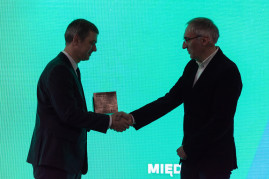
Out of 60 submissions, the international Awards Committee appointed by the Pilecki Institute shortlisted 12 publications, ultimately selecting three winners and two honorary mentions. The winners and authors of commended books received commemorative statuettes and cash prizes. The awards ceremony was held under the honorary patronage of the Minister of Culture and National Heritage.
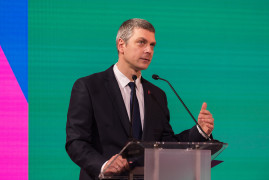
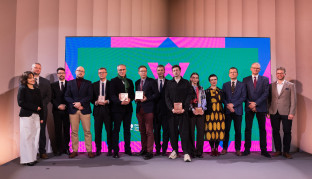
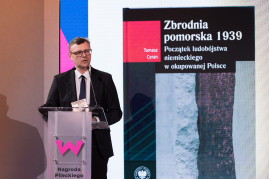
The Witold Pilecki International Book Award celebrates outstanding authors and their most important books through awards and honorable mentions. While the winners take center stage – especially today, during the awards ceremony – the Award is not just about them, said Karol Madaj, Acting Director of the Pilecki Institute. The Pilecki Award also gives us an opportunity to present to you, ladies and gentlemen, the most valuable books published in the previous year. The value of a good book cannot be overestimated. In the time of haste, sensationalism, fake news, brainrots, as well as information and misinformation overload – we need books as carriers of verified knowledge. That is why we are all the more keen to recognize publications that are reliable and credible. Please take good note of all these publications and, better still, try to find them in bookstores and libraries and simply read them, emphasized Director Karol Madaj.
The Witold Pilecki International Book Award has been awarded since 2021 in partnership with the Auschwitz-Birkenau State Museum in Oświęcim. The Awards Committee includes representatives of both institutions and the Pilecki family, as well as Polish and foreign historians and publicists.
In this 5th edition, the prizes were awarded to authors of the best academic and journalistic books published in 2024 and devoted to the experience of the countries of Central and Eastern Europe in confronting totalitarianism in the 20th century, with a particular emphasis on Poland. The awarding of the Special Prize was possible thanks to financial support from a private donor.
Winners of the Witold Pilecki International Book Award 2025
Category: Academic History Book
– for the best monograph or synthesis on the experience of the countries of Central and Eastern Europe of confronting totalitarianism in the 20th century, with a particular emphasis on Poland.
Main prize
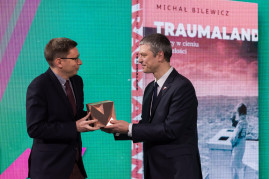
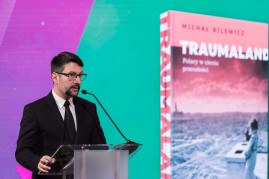
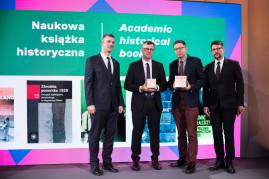
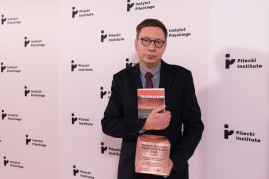
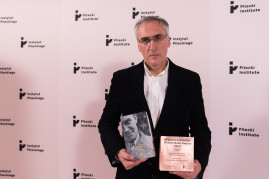
- Michał Bilewicz, Traumaland. Polacy w cieniu przeszłości, Wydawnictwo MANDO/Wydawnictwo WAM
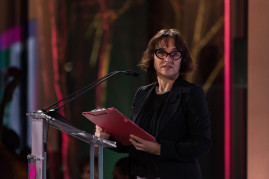
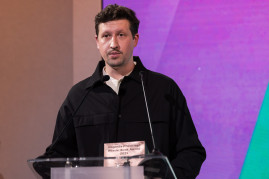
The readers of “Traumaland” take up a challenge to immerse themselves in the pandemonium of the Poles’ attitude towards their own past, said Prof. Pierre-Frédéric Weber, a member of the Awards Committee, in his commendation speech. The author balances detachment with empathy. He often uncovers, analyzes and reopens Polish wounds with painful earnestness, but only to clean them – from myths, propaganda and intellectual shortcuts. For it is only then that the wounds can heal, added Pierre-Frédéric Weber. It would probably be an exaggeration to say that “Traumaland” offers a collective psychoanalysis of the Polish soul. Nevertheless, the book contains much of the knowledge needed to address the traumas of the 20th century in a conscious and mature manner.
In his book, Michał Bilewicz explains how difficult history and collective trauma affect the thinking of contemporary Poles, and points to behavior patterns that we have “inherited” from our ancestors.
Dr hab. Michał Bilewicz, Professor at the University of Warsaw, heads the Center for Research on Prejudice at the university’s Faculty of Psychology. His research interests include psychological mechanisms of reconciliation, collective memory, trauma, and prejudice.
Honorary mention:
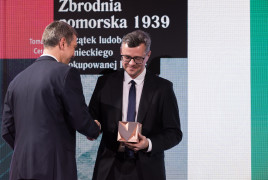
- Tomasz Ceran, Zbrodnia pomorska 1939. Początek ludobójstwa niemieckiego w okupowanej Polsce, Instytut Pamięci Narodowej
The book recounts the extermination of the Polish and Jewish civilian populace in Pomerania in the first months of the German occupation. Drawing in part on previously unused materials from the Central Office of the State Justice Administrations for the Investigation of National Socialist Crimes in Ludwigsburg, the author analyzes the causes, development and consequences of the crime, while also evoking Raphael Lemkin’s concept of genocide.
Dr hab. Tomasz Ceran works at the Bydgoszcz Branch of the Institute of National Remembrance. His research focuses on the history of ideas, the theory of totalitarianism, genocide studies and the German occupation of Gdańsk Pomerania and Kuyavia.

Category: Historical Reportage
– for the best book that offers the reader an engaging story about the experience of the countries of Central and Eastern Europe of confronting totalitarianism in the 20th century, with a particular emphasis on Poland. In addition to classic historical reportages, biographies, memoirs and accounts of witnesses to history may also be submitted in this category.
Main prize
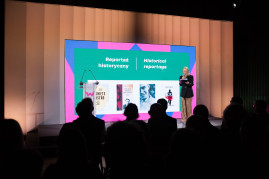
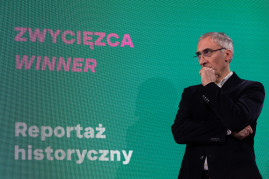
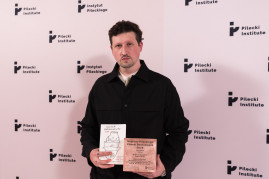
- Emil Marat, Bratny. Hamlet rozstrzelany, Wydawnictwo Czarne
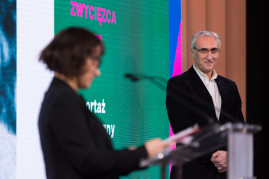
While writing the winning publication, the author made good use of the capital he had accumulated over the years as an experienced, acclaimed and award-winning reporter and writer. He has been writing about Bratny for years, said Aneta Prymaka-Oniszk, a member of the Awards Committee, in her commendation speech. It can be said, therefore, that “Bratny, Hamlet rozstrzelany” has been long in the making, perhaps even before Emil Marat had realized it himself. This is the magic that combines many years of hard work, perseverance and experience – including that ordinary human experience – with a youthful passion to produce wonderful books, emphasized Aneta Prymaka-Oniszk.
The author of Kolumbowie. Rocznik 20, a book that has shaped the collective memory of the Warsaw Uprising among several generations of Poles, is rightfully dubbed “the Polish Hemingway”. A notorious womanizer and a troubled father, he had both conflicted feelings and conflicted views. The biography of Roman Bratny takes a closer look at his complex personality, while also exploring his legacy in Polish culture.
Emil Marat is a journalist and a non-fiction author. Bratny. Hamlet rozstrzelany is the final book in his trilogy about the protagonists of the Kolumbowie. Rocznik 20 novel, after Made in Poland (co-written with Michał Wójcik) and Sen Kolumba.
The Awards Committee did not present an honorary mention in this category owing to an equally high standard of all the nominated publications.

Category: Special Prize
– for the best book that bears testimony to the criminal actions of contemporary totalitarian and authoritarian systems, describes the tragic fate of populations affected by wars and armed conflicts, and condemns deliberate and persistent violation of human rights.
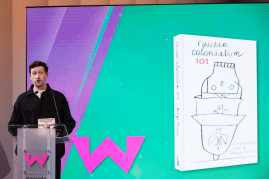
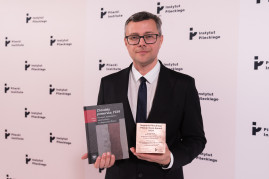
- Maksym Eristavi, Russian Colonialism 101. How to Occupy a Neighbor and Get Away with It. An Illustrated Guide, IST Publishing
Just before Russia’s attack, the Ukrainian journalist went online to publish a list of Russian invasions in recent decades. His post immediately went viral. In cooperation with other Ukrainian artists, the author transformed it into an illustrated “guide to Russian invasions”, hoping to bring public attention to the aggressor’s pattern of behavior and long-standing impunity.
Maksym Eristavi is a journalist, podcaster and author of multimedia educational projects. His works combine investigative journalism with storytelling to expose Russia’s imperial politics.
It is a visually appealing, minimalist guide to Russian imperialism, said Krzysztof Kosior, the great-grandson of Witold Pilecki and a member of the Awards Committee, in his commendation speech. This approach is unique, even groundbreaking, as it draws on the Internet meme culture, where an image with a short comment refers to an event or a situation.
This concept, which is both innovative and very modern, made a deep impression on me. Behind each drawing and each note, there are carefully selected sources: quotes from historical publications, the press, public statements and other materials available online. Each element offers a comment, but it for the readers to decide whether it is pertinent or not, as they discover further details and contexts, emphasized Krzysztof Kosior.
Honorary mention:
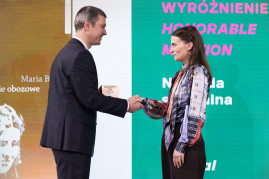
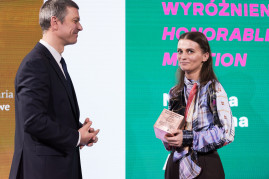
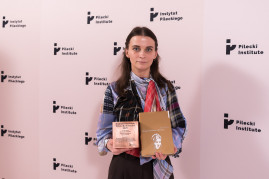
- Maria Buko, Drugie pokolenie obozowe. Pamięć i doświadczenie potomków polskich więźniów niemieckich nazistowskich obozów koncentracyjnych, Wydawnictwo Naukowe UMK
The Second World War finds an echo not only in the memoirs of its witnesses or in political disputes. The harrowing experiences of people who survived the German totalitarian hell marked the lives of their children – the second camp generation. The book presents the author’s findings from extensive research on transgenerational trauma, while also giving sympathetic expression to everyday life stamped with pain.
Dr. Maria Buko is a social scientist, historian, documentarian, and oral history researcher. She studies autobiographical, intergenerational and collective memory, as well as its social and historical contexts.

See also
- Previously unpublished German archival materials from France’s ECPAD at the Pilecki Institute and the Warsaw Rising Museum
News
Previously unpublished German archival materials from France’s ECPAD at the Pilecki Institute and the Warsaw Rising Museum
The Witold Pilecki Institute of Solidarity and Valor and the Warsaw Rising Museum have signed a strategic trilateral cooperation agreement with ECPAD (Établissement de Communication et de Production Audiovisuelle de la Défense / Defense Communication and Audiovisual Production Center), the French military audiovisual archive based in Ivry-sur-Seine, France. The agreement gives the Polish institutions access to unique Second World War photographs previously unseen in Poland, opens access to the vast holdings of the French archive, and launches a partnership of major significance for research into Polish history.
- „Soviet Central Asia as a Totalitarian Testing Ground” - international academic conference
News
„Soviet Central Asia as a Totalitarian Testing Ground” - international academic conference
Three days, dozens of presentations, and researchers from Poland and abroad summed up the international academic conference held at the Pilecki Institute in Warsaw on 2–4 September.
- The hitherto unknown memoirs of a German official from occupied Poland have been donated to the Pilecki Institute
News
The hitherto unknown memoirs of a German official from occupied Poland have been donated to the Pilecki Institute
A unique document has been added to the Pilecki Institute’s archives: the previously unpublished and unknown memoirs of a German official who worked in the civil administration of the General Government during the Second World War.
- Evil Woven into Everyday Life | Dr Joanna Nikel on the Memoirs of a German Official from His Stay in the General Government
News
Evil Woven into Everyday Life | Dr Joanna Nikel on the Memoirs of a German Official from His Stay in the General Government
"It is rare for a document to find its way into archival collections in which the voice of an official of the occupation apparatus himself – written down without any intention of accusation, and even stressing his own sense of normality – becomes one of the most eloquent testimonies to the criminal nature of the system he served", writes Dr Joanna Nikel in her initial commentary on the materials received by the Pilecki Institute.
- 14 books nominated for this year’s Witold Pilecki International Book Award
News
14 books nominated for this year’s Witold Pilecki International Book Award
On Saturday, 5 September, at the Autumn Book Fair in Warsaw, the Pilecki Institute announced the titles and authors of 14 books nominated for this year’s Witold Pilecki International Book Award.
- New Jork | Exhibition: Between Life and Death. Stories of Rescue during the Holocaust
News
New Jork | Exhibition: Between Life and Death. Stories of Rescue during the Holocaust
Through October 29, the Pilecki Institute in New York is hosting an exhibition about the people who risked their own lives to save Jews during the Holocaust—and those who survived thanks to their courage.
- „Soviet Central Asia as a Totalitarian Testing Ground” - international academic conference
News
„Soviet Central Asia as a Totalitarian Testing Ground” - international academic conference
The international academic conference organized by the Pilecki Institute is the first initiative in Poland to bring together interdisciplinary research on Soviet Central Asia, a region with an exceptionally complex history of totalitarianism, mass repression, and forced deportations, that also include the experiences of Poles.
- Karol Madaj appointed Director of the Witold Pilecki Institute of Solidarity and Valor
News
Karol Madaj appointed Director of the Witold Pilecki Institute of Solidarity and Valor
Marta Cienkowska, the Minister of Culture and National Heritage, has appointed Karol Madaj Director of the Witold Pilecki Institute of Solidarity and Valor in Warsaw. His five-year term will begin on 30 August 2026. From 1 September 2025, Karol Madaj served as the acting director of the Pilecki Institute.
- Hacker attack on the websites of the Pilecki Institute in Warsaw, Berlin, and Augustów
News
Hacker attack on the websites of the Pilecki Institute in Warsaw, Berlin, and Augustów
On the night of August 13–14 our websites suffered another serious hacking attack. Content bearing the hallmarks of Russian propaganda and disinformation — targeting Polish history and reinforcing anti-Ukrainian narratives — was deliberately placed on the Institute's pages devoted to Augustów, Berlin, and Warsaw.
- Academic conference “Oppositional Engagement of Women in Authoritarian and Totalitarian Systems of the 20th Century: Poland in a Comparative European Perspective (1919–1989)”
News
Academic conference “Oppositional Engagement of Women in Authoritarian and Totalitarian Systems of the 20th Century: Poland in a Comparative European Perspective (1919–1989)”
The second academic conference in a series “Oppositional Engagement of Women in Authoritarian and Totalitarian Systems of the 20th Century: Poland in a Comparative European Perspective (1919–1989)” brought together representatives of various fields of the humanities and social sciences from numerous research centers in Poland and abroad.
- Accountability for War Crimes. New book from Pilecki's expert
News
Accountability for War Crimes. New book from Pilecki's expert
It is an expanded English-language edition of the monograph "Problem odpowiedzialności karnej za zbrodnie wojenne w pracach rządu polskiego na emigracji (1939–1945)", which in 2023 was awarded a grant under the Ministry of Science and Higher Education’s “Excellent Science II” program for the translation and open-access publication of the book abroad.
- 12 July | Day of Remembrance for the Victims of the Augustów Roundup
News
12 July | Day of Remembrance for the Victims of the Augustów Roundup
12 July is celebrated as the National Day of Remembrance for the Victims of the Augustów Roundup. The roundup began 81 years ago on this day – on 12 July 1945, two months after the end of the Second World War.