Tadanori Ishiguro - Instytut Pileckiego
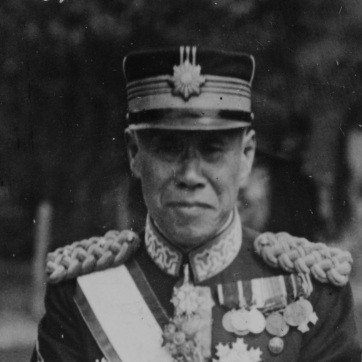
Tadanori Ishiguro decided that the Japanese Red Cross would take 375 Polish children under its care.
Born Tsunetarō Hirano, he adopted the name Tadanori in 1856. Orphaned in 1861, he was adopted by the Ishiguro family. He studied at a medical school in Tokyo and became a military physician. Thanks to his abilities, he acquired further qualifications and held a number of important positions, including serving as director of the Army Medical School in Tokyo from 1888 to 1890. He served on the front as a physician during the war with China and later during the war with Russia. In recognition of his service, he was granted the title of baron in 1895 and viscount in 1920.
At the same time, he became deeply involved in the Japanese Red Cross Society, which had been developing as an organization since 1877. As a member of the Japanese delegation, he attended the Fourth International Conference of the Red Cross in Karlsruhe in 1887. He continued this activity even after retiring in 1912, and five years later became president of the Japanese Red Cross Society. He held this position until mid-1920.
Toward the end of his term in office, Anna Bielkiewicz, president of the Polish Relief Committee for Children of the Far East, began efforts to secure admission to Japan for Polish orphans evacuated from eastern Siberia and Manchuria. In June 1920, Tadanori Ishiguro decided that assistance should be provided to the Siberian children and that they should be placed under the care of the Japanese Red Cross Society. This decision made it possible for 375 Polish children to enter Japan. After a period of medical treatment and convalescence, they were transported to their homeland.
After Ishiguro stepped down as president, his work continued. In the following years, another group of 390 children received assistance from the Japanese Red Cross Society. Ishiguro himself continued to support the activities of the Polish Relief Committee for Children of the Far East. In 1921, he became involved in fundraising for the construction of orphanages in Poland. In 1924, he became an honorary member of the Committee, which was by then operating in Poland. He died in Tokyo on 26 April 1941.
“The next day, at 11 a.m., I had an audience scheduled at the Japanese Red Cross Society. [...] In a moment I was to meet the people who had taken our children in... how fervently I thanked them... Viscount Ishiguro, who was president of the Japanese Red Cross Society when the children’s fate was being decided; the current president, His Excellency Hirayama, who subsequently took charge of this powerful institution, the Japanese Red Cross Society, and continued the work that had been begun. These names should remain in eternal memory, surrounded by the reverence they deserve.”
Anna Bielkiewicz, Dla dzieci polskich w Japonji, “Echo Dalekiego Wschodu” 1922, no. 10, p. 6
Photo credit: Jagiellonian Library in Kraków
See also
- Klára Andrássy Odescalchi

awarded
Klára Andrássy Odescalchi
(1898–1941)Hungarian aristocrat, social activist, and friend of Poland. Following the outbreak of World War II, she was actively involved in assisting thousands of Poles, providing them with shelter, food, and support in their further evacuation.
- Mychajło Susła
awarded
Mychajło Susła
(1901–1970)A double Christmas, a double Easter: Roman Catholic and Greek Catholic. This is how Irena Próchniak remembers the celebrations in Podkamień in eastern Galicia.
- Fedor Bojmistruk (1905-1978) Kateryna Bojmistruk (1909-2000)
awarded
Fedor Bojmistruk (1905-1978) Kateryna Bojmistruk (1909-2000)
“I was crying in the barn, next to the corpses of two boys and an elderly man. I was holding a tiny piece of bread in one hand and a handkerchief with two letters in another. The letters were probably my initials. What were they? I don’t know”