Klára Andrássy Odescalchi - Instytut Pileckiego
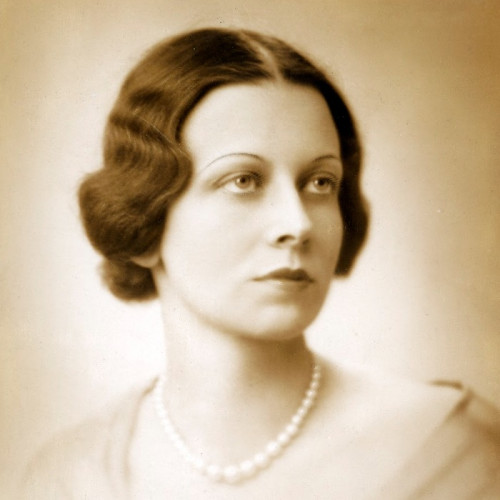
Hungarian aristocrat, social activist, and friend of Poland. Following the outbreak of World War II, she was actively involved in assisting thousands of Poles, providing them with shelter, food, and support in their further evacuation.
A highly educated aristocrat who dedicated her entire life to social and political
activism. She was a member of the Holy Crown Alliance of Hungarian Women
(Magyar Nők Szentkorona Szövetsége), the Hungarian Society for Family Welfare (Magyar Családgondozó Szövetség), and the League of Hungarian Intellectuals (Magyar Értelmiség Ligája). In 1931, she ran unsuccessfully for the Hungarian parliament as a candidate for the Christian Opposition (Keresztény Ellenzék). She also engaged in journalism. In 1921, she married Prince Károly Odescalchi, and two years later gave birth to their son Pál. Unfortunately, the marriage fell apart in 1929.
In September 1939, following the German aggression against Poland and the
subsequent Soviet invasion, the Princess did not remain indifferent to the plight of thousands of Polish refugees crossing into Hungary. Joining forces with others in her social circle, mostly women, she became involved in providing aid. Working at the border, she organized the placement of the first groups of Polish refugees, and later co-founded and served as vice chair of the Hungarian-Polish Refugee Welfare Committee (Magyar-Lengyel Menekültügyi Bizottság). She visited military and civilian camps for Poles, campaigned for better living conditions, organized clothing, and distributed care packages. She made rooms in her family residence, the Andrássy Palace in Budapest, available for the Committee’s needs. She also allocated a section of the building to Polish medical services and the Hungarian branch of the Polish Red Cross. A clinic for Poles was organized on the mezzanine floor. The Princess also took part in preparations for the secret evacuation of Polish soldiers to the West. As a result of this operation, some 45,000 Poles crossed into Yugoslavia between 1940 and 1941.
What is more, Klára Odescalchi Andrássy cooperated closely with representatives of the British government. She was regarded as a valuable agent acting on behalf of Polish and British interests. When it was already known that German troops would attack Yugoslavia and thus pass through the Hungarian territory, the British decided to evacuate Klára to London out of concern for her safety. In accordance with a pre-arranged plan, she made for Dubrovnik, where she waited to board the ship. On 12 April 1941, she was heavily wounded during the Italian bombing of the city. Despite undergoing surgery, she passed away that same evening.
“Princess Odescalchi devoted the final years of her life to the fate of Polish refugees, earning the widespread and deep affection of all Poles through her endearing kindness, her benevolent advocacy for their cause, and her relentless dedication to their welfare. At the news of her death, all Polish refugees were plunged into great mourning; paying profound tribute to the noble Heart of this illustrious daughter of the Hungarian nation, we will always hold Her in the fondest remembrance.”
The Late Princess Klára Odescalchi Andrássy, “Wieści Polskie” 1941, no. 57, p. 3
Photo at the top of the page: from Marek Odescalchi's private archive.
See also
- Petro Bazeluk (1903–1949)

awarded
Petro Bazeluk (1903–1949)
Mykola Bazeluk said that there was no difference between who was a Pole and who was a Ukrainian in Volhynia before the war. That all changed in 1943, when, as he put it, “Brother turned on brother.”
- Etela Laczuschová
awarded
Etela Laczuschová
(1922–1944)The Kežmarok house was a unique location for Polish couriers and refugees: they could rest and recuperate there, eat a meal, or obtain necessary assistance.
- Władysława Nagórka z d. Lech (1895—1981)
awarded
Władysława Nagórka z d. Lech (1895—1981)
Antoni and Władysława Nagórka lived at the edge of the town. Before the war, Antoni worked for the railways, and Władysława was a housewife. During the war they saved five Jews from the Holocaust.