Narinobu Hirayama - Instytut Pileckiego
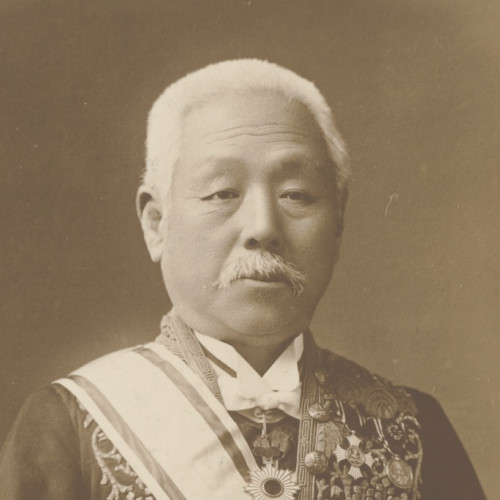
He actively supported the Polish Relief Committee for Children of the Far East in its efforts to rescue Polish orphans from Siberia, which was gripped by famine and revolution.
Born in Edo, present-day Tokyo. He was the son of Hisanari Takemura, a member of the shogunate. He was adopted by Saisei Hirayama, a samurai, government official, and government adviser. He received a thorough education that prepared him for service in the state administration. As a representative of the Ministry of Foreign Affairs, he served on missions in Vienna and Paris. He held numerous public offices, including secretary to the Minister of Finance, first secretary of the Privy Council – an advisory body to the emperor – and member of parliament. He was involved in the development of education for women. He also engaged in social and charitable activities. In recognition of his service, he was granted the title of baron in 1924.
He served as vice president and, from July 1920 until his death, as president of the Japanese Red Cross Society. He continued the work begun by his predecessor, Tadanori Ishiguro. He actively cooperated with the Polish Relief Committee for Children of the Far East and became involved in efforts to assist Polish orphans evacuated from Siberia, which had been engulfed by revolution and famine. He received successive groups of young refugees for whom Japan was a stopping place on the journey to Poland. At facilities run by the Fukudenkai Association in Tokyo and Osaka, the children received the care they needed. President Hirayama personally visited both facilities and remained in contact with those caring for the children. Thanks to his efforts, the final transports from Osaka to Gdańsk were fully funded by the Japanese Red Cross Society. A total of 765 children received assistance as part of the operation. After they left Japan, Hirayama continued to support them by assisting the Relief Committee for Children of the Far East, which was by then
operating in Poland. He became an honorary member of the Committee. He died on 25 September 1929.
“Baron Hirayama – President of the Japanese Red Cross Society, one of the most devoted friends of the Polish children from Siberia. The financial support for the Polish Relief Committee’s operation that His Excellency Hirayama secured for the children in Japan amounted to as much as 500,000 yen, while the moral and practical assistance was of far greater significance.”
Dzieci polskie z Syberji w Japonji i Wejherowie w 30 ilustracjach fotograficznych, Warsaw 1926, p. 5
See also
- Elna Gistedt-Kiltynowicz

awarded
Elna Gistedt-Kiltynowicz
(1895–1982)Warsaw audiences adored her. For Elna Gistedt from Sweden, Poland became a second home when she married industrialist Witold Kiltynowicz in 1922.
- Antoni Nagórka (1901—1977)
awarded
Antoni Nagórka (1901—1977)
Antoni and Władysława Nagórka lived at the edge of the town. Before the war, Antoni worked for the railways, and Władysława was a housewife. During the war they saved five Jews from the Holocaust.
- Hélène Pionstka z d. Waldmann
awarded
Hélène Pionstka z d. Waldmann
(1921–2009)In 1941, the Germans established a POW camp for Polish soldiers close to the farm of Émile and Alice Waldmann in Ursprung, Alsace.