Zofia Teliga - Instytut Pileckiego
A Siberian exile and social activist who helped hundreds of Poles return from Kazakhstan to Poland and start a new life in their homeland.
She was born and raised in Trans-Olza. In 1925, she married Stefan Teliga, a soldier of the Polish Army. A year later, she gave birth to their only child, Zofia. The family settled in Volhynia.
Following the invasion of Poland on 17 September 1939, the Soviets began mass deportations of Poles into the USSR. In February 1940, the Teligas were transported to the Arkhangelsk Oblast. After the “amnesty” for Poles was announced in 1941, they headed toward the area where the Polish Army was being formed, but Stefan died on the way in a hospital in Kokand. Zofia and her daughter were sent to the Kozmoldak kolkhoz in the Kazakh SSR. During the evacuation of Anders’ Army, Zofia organized the transport of Polish orphans from Chulak-Kurgan, which was threatened by a typhus epidemic, to Turkestan. In the autumn of 1942, she relocated there with her daughter and served as head of the Polish children’s home until Joseph Stalin severed diplomatic ties with the Polish government-in-exile. At the time, on Stalin’s initiative, the Union of Polish Patriots was formed in the
USSR; the organization was oriented towards cooperation with the Soviets and promotion of the Communist ideology, while discrediting prewar Poland and the government-in-exile. At the same time, for Poles in Kazakhstan and other Soviet republics, engagement in the Union’s activities was the only chance for a better life and return to the homeland. They joined the organization for humanitarian reasons, usually rejecting the promoted ideology.
Such was the case of Zofia Teliga, who became involved in the activities of the Union of Polish Patriots and started building its structures in Turkestan in the autumn of 1943. She organized large-scale aid for Poles: compiled lists of exiles and assessed their material situation, traveling to faraway regions; delivered food, clothes and hygiene products; as well as established a Polish school and a home for the elderly.
After the Polish-Soviet repatriation agreement was concluded on 6 July 1945, she focused on helping exiles return to the country, especially on organizing “proofs of Polishness”. She contributed to the return of about 250,000 people.
In July 1946, Zofia Teliga went back to Poland. She settled in Wrocław and worked in social services. In the early 1990s, together with her daughter, they began efforts to repatriate Poles from Kazakhstan. They founded a settlement in Szczytnica near Bolesławiec, where approx. 200 repatriates from the East found their home. Zofia Teliga passed away on 18 November 2001.
“Chairwoman of the Inter-Regional Board of the Union of Polish Patriots was
Ms Zofia Teliga [...]. She was a very energetic and dedicated person, who firmly demanded everything we were entitled to. It was through her efforts that a Polish lower-secondary school was established in Turkestan [...]. About 320 Polish orphans and half-orphans were provided with housing, meals, and education in Polish.”
Jadwiga Bortnik-Pytlarzowa, W tajdze i piaskach południowego Kazachstanu, in: Wspomnienia Sybiraków. Zbiór tekstów źródłowych, ed. Jerzy Kobryń, Bystrzyca Kłodzka 2008, p. 67
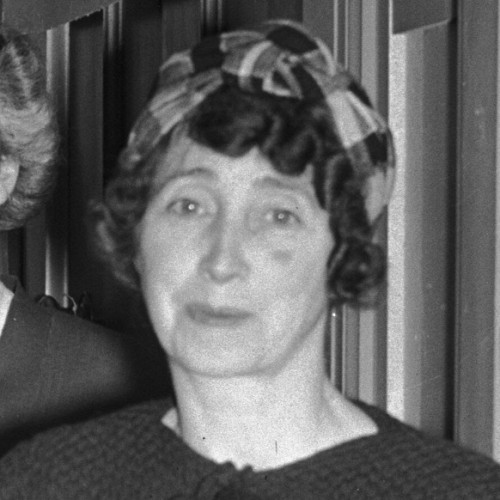
Photo of Zofia Teliga at the top of the page: The Sybiracy Archive at the University of Łódź.
See also
- Wołodymyr Kryżuk

awarded
Wołodymyr Kryżuk
Since the early 2000s, he has been helping Poles who travel to look after the graves of the victims of the massacre carried out by members of the Ukrainian Insurgent Army (faction of the Organization of Ukrainian Nationalists).
- Józef Jakóbkiewicz
awarded
Józef Jakóbkiewicz
(1892–1953)Józef Jakóbkiewicz doctor and an active member of the scouting movement, vice chair of the the Polish Relief Committee for Children of the Far East.
- Ann Jacques
awarded
Ann Jacques
(1893–1994)Secretary of the Polish Army League in New Zealand, an organization that supported Polish soldiers during World War II. Together with her husband William, she supported, among other initiatives, the center for Polish orphans in Pahiatua.