Józef Jakóbkiewicz - Instytut Pileckiego
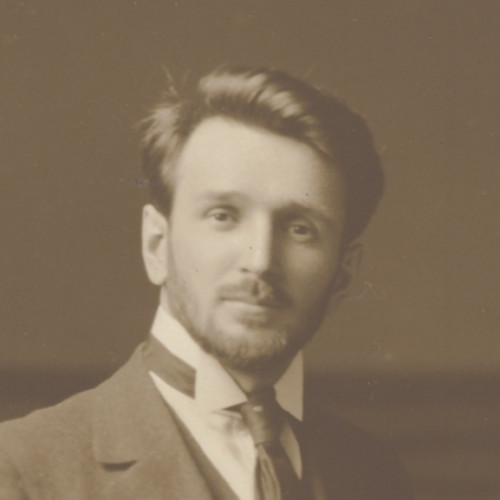
Józef Jakóbkiewicz doctor and an active member of the scouting movement, vice chair of the the Polish Relief Committee for Children of the Far East.
Born in Perm into the family of a January Uprising insurgent who had been exiled deep into Russia. He completed his medical studies in Moscow, where he was when the revolution broke out in 1917. He arrived in Vladivostok with a wave of refugees. He became known as a dedicated doctor and an active member of the scouting movement.
In September 1919, the local Polish community elected him vice president of the Polish Relief Committee. The organization provided assistance to Polish refugees arriving in the Far East from areas engulfed by civil war. Fairly quickly, however, it began to focus on rescuing orphans and children from families living in poverty. It was later renamed the Polish Relief Committee for Children of the Far East. Jakóbkiewicz took part in expeditions along the railway lines of the Far East and to the largest centers of eastern Siberia and Manchuria. He took children from abandoned trains, Chinese and Russian shelters, orphanages, and the streets. Between 1919 and 1923, assistance
was provided to 765 Polish children. They were evacuated in two groups to Japan, from where, after a period of rest and convalescence, they continued their journey to the homeland. Józef Jakóbkiewicz also sought financial and logistical support for the entire operation. To this end, he made two trips to the United States, where he secured assistance from the Polish community, as well as visas and permission from the U.S. government for the first group of children to enter the country.
At the end of 1922, he arrived in Poland with the second group of children in his care. Faced with the difficult conditions he found there, he and Anna Bielkiewicz established the Educational Institution for Siberian Children in Wejherowo. Jakóbkiewicz worked there as an educator and doctor. The institution operated until 1928 according to educational principles he had developed based on scouting models. Their main objective was to help the children become self-reliant and raise them to be good citizens.
In 1930, the state assumed responsibility for the children, and Józef Jakóbkiewicz returned to medicine. From 1937, he headed the Gdynia branch of the National Institute of Hygiene. Between 1940 and 1946, he lived in Grenoble, where he worked for the Polish Red Cross, and after the war he became a spa physician in Cieplice Śląskie-Zdrój. He died in Łódź on 9 July 1953.
“Despite the great difficulties Dr. Jakóbkiewicz encountered in his work, I can
confidently say that he worked tirelessly and with almost fanatical energy. He
explored every possible source from which funds might be obtained for our
unfortunate compatriots in Siberia. In my opinion, Dr. Jakóbkiewicz worked
miracles in raising as much as he did.”
Letter from Kazimierz Lubomirski to Stanisław Patek dated 19 June 1922, Archives of Modern Records, 2/490/0/-/2512, Siberian relief operation for Poles. Correspondence
Photo credit at the top: Jagiellonian Library in Kraków.
See also
- Alfred Iversen

awarded
Alfred Iversen
(1908–1987)A Norwegian citizen who helped Poles, prisoners of a German forced labor camp, escape to Sweden.
- Fedor Bojmistruk (1905-1978) Kateryna Bojmistruk (1909-2000)
awarded
Fedor Bojmistruk (1905-1978) Kateryna Bojmistruk (1909-2000)
“I was crying in the barn, next to the corpses of two boys and an elderly man. I was holding a tiny piece of bread in one hand and a handkerchief with two letters in another. The letters were probably my initials. What were they? I don’t know”
- Tadanori Ishiguro
awarded
Tadanori Ishiguro
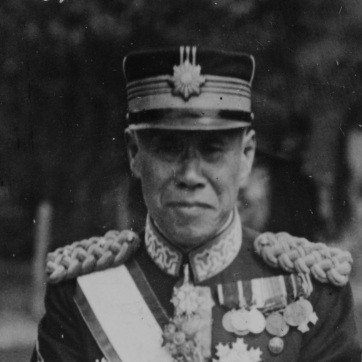
(1845–1941)Tadanori Ishiguro decided that the Japanese Red Cross would take 375 Polish children under its care.