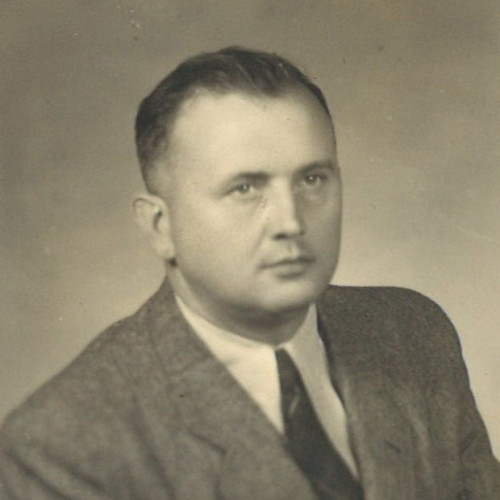
Niels Jørgensen Niels Jørgensen - Instytut Pileckiego
Niels Jørgensen Niels Jørgensen (1919–1974)
Awarded in 2026.
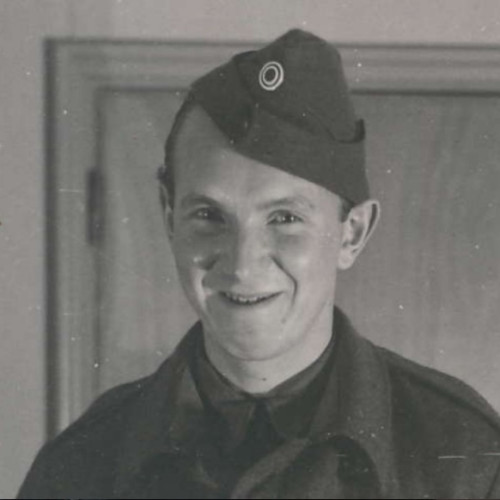
Together with the Dahl brothers, he helped Polish prisoners of war. In the summer of 1942, they twice assisted Polish prisoners of war in making their way to Sweden.
A young Norwegian telegraph operator who, like his friends the Dahl brothers,
refused to accept the German occupation of his country during the Second World War. He joined XU, a clandestine intelligence network working for the Allies. From 1939 to 1941, he studied at the state telegraph school. After graduating, he began working in 1942 at the telecommunications office in Namsos, in the central part of the country. His workplace gave him access to information about German activities, and he passed the intelligence he gathered to the Norwegian underground.
Together with the Dahl brothers, he also helped escapees from German camps. In the summer of 1942, they twice assisted Polish prisoners of war in reaching Sweden. On the first occasion, in August, two Poles reached their destination safely. Unfortunately, in September, another two Poles were captured by the Germans.
In the autumn of 1942, after the transmitting station in Namsos was closed, Niels Jørgensen was transferred to Vadsø in the far north of Norway. He was arrested for helping the Poles and imprisoned in a local camp. He was released after six months. He found employment as a telegraph operator at the Vadsø branch of Telegrafverket, where he continued working for XU.
After the war, he started a family. In 1949, he moved to Namsos with his wife and two sons. He worked at the telegraph office. He died in Namsos on 31 May 1974.
“My cousin told me that there were two Polish escapees, Polish soldiers who
had, of course, been arrested by the Germans. They had been in a camp and then managed to escape. They reached Otterøya, where they stayed for a while. The question then arose of how we could help them. [...] What we did was try to get them to Sweden, so we found someone who had a boat, and then we picked them up from Otterøya, where they were staying, and took them up the Namsen on the southern side. From there we continued by bicycle, pretending to be going berry picking in order to camouflage the whole operation. We then escorted them farther inland to a certain point, and Jørgensen drew a map for them. We also gave them a compass. From Lake Bangsjøan onward, they knew the way. Jørgensen walked with them for part of the route and explained to the one who spoke the language how they should continue in order to reach Sweden.”
Interview with Adolf Dahl, 4 June 1997, Falstad Center
Photo of Niels Jørgensen at the top of the page: Private archive of Stein Jørgensen.
See also
- Piotr Parfeniuk

awarded
Piotr Parfeniuk
(1904–1993)Although his given name was Petro, Parfeniuk used the name Piotr for the majority of his long life. Before the outbreak of the war, he met his future wife, Stanisława, from the Polish Czerwinek family.
- Jan Jelínek (1912–2009)
awarded
Jan Jelínek (1912–2009)
In 1937, the care of the Evangelical parish in Kupiczów, Volhynia was entrusted to Jan Jelínek. The young pastor won the hearts of the Czechs, who had settled there in the 19th century. In his sermons he preached love of neighbor regardless of his beliefs.
- Elna Gistedt-Kiltynowicz
awarded
Elna Gistedt-Kiltynowicz
(1895–1982)Warsaw audiences adored her. For Elna Gistedt from Sweden, Poland became a second home when she married industrialist Witold Kiltynowicz in 1922.