Niels Jørgensen - Instytut Pileckiego
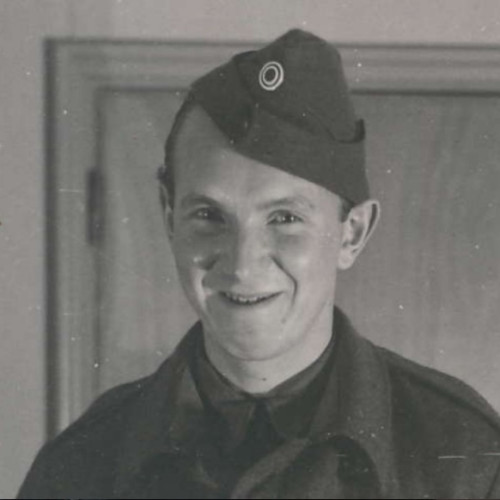
Together with the Dahl brothers, he helped Polish prisoners of war. In the summer of 1942, they twice assisted Polish prisoners of war in making their way to Sweden.
A young Norwegian telegraph operator who, like his friends the Dahl brothers,
refused to accept the German occupation of his country during the Second World War. He joined XU, a clandestine intelligence network working for the Allies. From 1939 to 1941, he studied at the state telegraph school. After graduating, he began working in 1942 at the telecommunications office in Namsos, in the central part of the country. His workplace gave him access to information about German activities, and he passed the intelligence he gathered to the Norwegian underground.
Together with the Dahl brothers, he also helped escapees from German camps. In the summer of 1942, they twice assisted Polish prisoners of war in reaching Sweden. On the first occasion, in August, two Poles reached their destination safely. Unfortunately, in September, another two Poles were captured by the Germans.
In the autumn of 1942, after the transmitting station in Namsos was closed, Niels Jørgensen was transferred to Vadsø in the far north of Norway. He was arrested for helping the Poles and imprisoned in a local camp. He was released after six months. He found employment as a telegraph operator at the Vadsø branch of Telegrafverket, where he continued working for XU.
After the war, he started a family. In 1949, he moved to Namsos with his wife and two sons. He worked at the telegraph office. He died in Namsos on 31 May 1974.
“My cousin told me that there were two Polish escapees, Polish soldiers who
had, of course, been arrested by the Germans. They had been in a camp and then managed to escape. They reached Otterøya, where they stayed for a while. The question then arose of how we could help them. [...] What we did was try to get them to Sweden, so we found someone who had a boat, and then we picked them up from Otterøya, where they were staying, and took them up the Namsen on the southern side. From there we continued by bicycle, pretending to be going berry picking in order to camouflage the whole operation. We then escorted them farther inland to a certain point, and Jørgensen drew a map for them. We also gave them a compass. From Lake Bangsjøan onward, they knew the way. Jørgensen walked with them for part of the route and explained to the one who spoke the language how they should continue in order to reach Sweden.”
Interview with Adolf Dahl, 4 June 1997, Falstad Center
Photo of Niels Jørgensen at the top of the page: Private archive of Stein Jørgensen.
See also
- Anatolij Giergiel (1904—1981)

awarded
Anatolij Giergiel (1904—1981)
In the summer of 1943 in Volhynia, having learned about a planned attack by Ukrainian nationalists on Poles, Anatolyi Giergiel warned his friend.
- César de Sousa Mendes do Amaral e Abranches
awarded
César de Sousa Mendes do Amaral e Abranches
(1885–1955)In the 1930s, César de Sousa Mendes was at the height of his diplomatic career. He worked at missions in Africa, Europe, America and Asia. He was Portugal’s Minister of Foreign Affairs for a year.
- Emil Vogl
awarded
Emil Vogl
(1901–1977)A Czech doctor of Jewish origin who treated the sick in the Łódź Ghetto and concentration camps. After the war, he devoted himself to helping children who had survived the camps.