Maria Trojan (1887–1972), Stefania Mudra (1910–1988), Maria Trojan (1920–1960) - Instytut Pileckiego
Maria Trojan (1887–1972), Stefania Mudra (1910–1988), Maria Trojan (1920–1960)
Awarded in 2026.
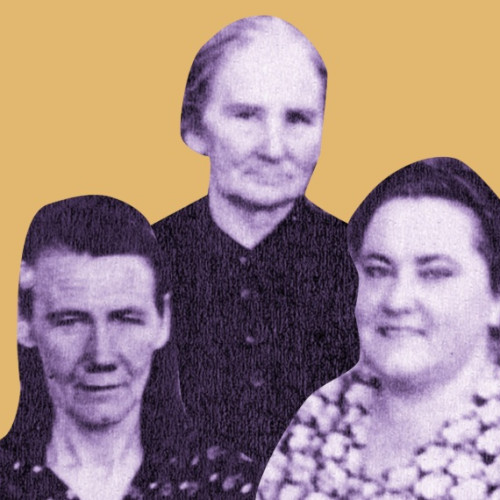
Three Ukrainian women deported deep into Kazakhstan, who took care of an orphaned boy, the child of Polish deportees.
In the Lwow region, which for centuries had been a melting pot of nations, mixed marriages were a common occurrence. Such was the case of Maria Strochan, a Ukrainian who married a Pole, Paweł Trojan. The couple settled in Złoczów and had two daughters: Maria and Stefania. Before the outbreak of the war, the latter had started her own family with Michał Mudry.
As Stalinist repression followed the Soviet invasion of Poland on 17 September 1939, many Polish citizens were deported deep into the USSR. Among them were Maria Trojan, her daughters and three granddaughters. They were sent to Borovoye in northern Kazakhstan, where they had to live in small mud huts.
A similar fate befell Zofia Hałacińska and her son Bogumił. In April 1940, they were deported to the area of Kostanay. Andrzej Hałaciński, Zofia’s husband, was murdered in the Katyn massacre. In 1942, the ailing Zofia passed away, leaving Bogumił alone. Transferred from family to family, he was placed in the Polish children’s home in Kostanay. After the facility was closed, the boy was sent to a Soviet orphanage.
Through the efforts of Poles, in the second half of 1942 Bogumił was placed in the care of Stefania Mudra. When in the spring of 1943 the woman volunteered for the 1st Tadeusz Kościuszko Infantry Division, the boy was taken in by her mother and sister. The older woman, Maria, taught him Polish; however, the primary responsibility for the boy lay with her daughter, who was also named Maria. In the spring of 1944, the looming threat of starvation forced the women to send the boy to an orphanage. The younger Maria
promised him that she would take him to Poland as soon as that became possible.
In the autumn of 1944, the women obtained permission to return to Poland. Although it was illegal, they decided to take Bogumił with them. Stefania bribed an NKVD officer with food. Having arrived in Złoczów, due to the threat posed by the Banderites, the women placed Bogumił in the care of the local parish priest Jan Cieński. Nevertheless, they maintained contact with the child, visiting him secretly and bringing him food. In November 1945, the priest handed the boy over to the care of a trusted family, the Skrzypeks, who moved with him to the area of Opole.
After the war, Bogumił kept in touch with the Trojan and Mudry families. The older Maria died on 10 February 1972. Her younger daughter Maria, who struggled with a severe illness, passed away in 1960. Stefania, in turn, took care of her home and children. She died on 13 June 1988.
“Boguś was not on the list of repatriates, he did not have any documents, and
whenever the soldiers counted the people, he was always the odd man out:
lishny – the extra, unwanted one. But they would take a look at him and let him go. Unfortunately, one of them was obstinate and hungry. He told him to get out of the train. ‘Chetyre yaytsa,’ he snapped. [...] Stefania Mudra had two eggs, and some merciful soul added one. ‘My life was worth three eggs...’ Boguś never forgot that lesson.”
Kinga Hałacińska, Kazali się szybko pakować. Wojenne losy Bogumiła Hałacińskiego, “Biuletyn IPN” 2017, no. 3, p. 142
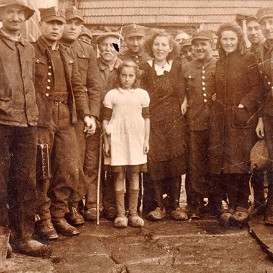
Image at the top of the page: Private archive of Maria Kindrat.
See also
- Rodzina Gorius

awarded
Rodzina Gorius
Eugène Gorius (1873–1953) ● Marie Gorius (1881–1971) ● Léon Humbert (1900–1969) ● Rosalie Eugénie Fogel Gorius (1919–2007) ● Jeanine Humbert Hermann (ur. 1934)
- Erzsébet Szápáry (1902-1980) Antal Szápáry (1905-1972)
awarded
Erzsébet Szápáry (1902-1980) Antal Szápáry (1905-1972)
Erzsébet and Antal Szápáry came from a famous family of Hungarian aristocrats. Their mother, Maria Przeździecka, was a Pole, and this fact had a bearing on their involvement in relief activities for Polish refugees after 1939.
- Herasym Łukiańczuk
awarded
Herasym Łukiańczuk
(1890–1953)“He walked slowly and told me discreetly: ‘Don’t go anywhere, maybe they won’t see you. I will come and get you in the evening. Your brother is already at my place,’” recalled Leokadia Skowrońska, who was saved by Herasym Lukianchuk.