Erling Berg - Instytut Pileckiego
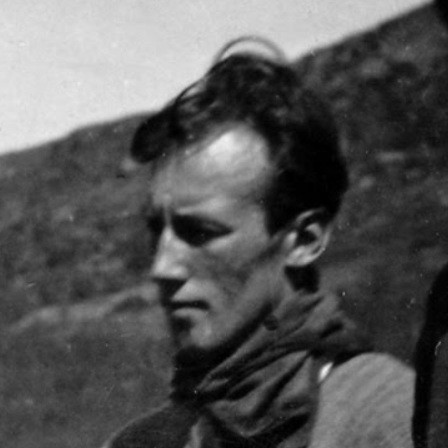
In late July and early August 1944, in a mountainous region, together with Leif Myklebust, they came to the aid of Michał Nowacki, a Polish escapee from the German camp in Fauske.
A mechanic by profession, he was a member of the Norwegian Labor Party before the war. At the end of 1943, he was assigned to work for the port police in Trondheim.
In the spring of 1944, the German-collaborationist government headed by Vidkun Quisling introduced compulsory labor mobilization for all men born between 1921 and 1923. The young men were to be put to work in the service of the German occupiers. Norwegian society was strongly opposed to these plans. The Norwegian government-in-exile in London called for a boycott, while the local resistance movement carried out numerous acts of sabotage. Government services, including the port police, were to be responsible for bringing in those who evaded the order.
Unwilling to take part in these activities, Erling Berg decided to flee to neutral Sweden. His colleague Leif Myklebust made the same decision, and in the final days of July 1944 they set out from Trondheim. While crossing the mountains, they heard someone calling for help. The injured man turned out to be a Pole, Michał Nowacki. He had escaped from a German camp in Fauske, located in the Arctic Circle. Together with several companions, he too had been trying to reach Sweden, but a serious leg injury prevented him from continuing the journey. His companions were supposed to bring help, but for reasons that remain unknown, they did not return. Nowacki had been alone for a week and had run out of food four days earlier. After finding him, the Norwegians fed him and took him with them. After a day’s march, they reached a military post in the small village of Staloluokta in Swedish Lapland. From there, they called for a medical aircraft. After Nowacki had been evacuated, they continued on their way and safely reached the tourist station in Kvikkjokk in early August.
After the war, Erling Berg returned to Norway. He died on 1 July 1987.
“On 22 or 23 July 1944, [the Poles] crossed the Swedish border, and after three days of traveling on foot through Swedish territory, [Michał Nowacki] suffered burns to his foot and was unable to continue. His companions went on, while he remained lying in the forest for seven days, subsisting on a small amount of bread he had taken with him before escaping. For four days, he had no food at all. He was then found by three Norwegian refugees, who gave him food, and because the condition of his foot had improved somewhat, he joined the Norwegians. After one day’s march, they reached a Swedish military post in a small village in Lapland. He remained in the Lappish village for one day, after which he was transported by air ambulance to Boden.”
Report on the interrogation of Michał Nowacki dated 10 August 1944, National Archives of Sweden, Statens utlänningskommission (SUK) Kanslibyrån, F1 AC-15384, Nowacki Michał, p. 6
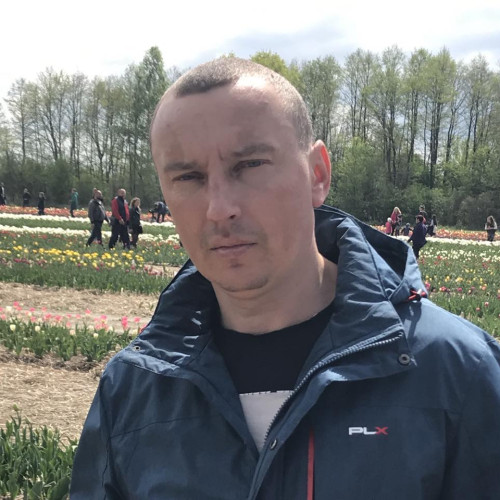
Photo of Erling Berg at the top of the page: Archive of Allan Norberg.
See also
- Wołodymyr Kryżuk

awarded
Wołodymyr Kryżuk
Since the early 2000s, he has been helping Poles who travel to look after the graves of the victims of the massacre carried out by members of the Ukrainian Insurgent Army (faction of the Organization of Ukrainian Nationalists).
- Rodzina Gorius
awarded
Rodzina Gorius
Eugène Gorius (1873–1953) ● Marie Gorius (1881–1971) ● Léon Humbert (1900–1969) ● Rosalie Eugénie Fogel Gorius (1919–2007) ● Jeanine Humbert Hermann (ur. 1934)
- Tassybaj Abdikarimow
awarded
Tassybaj Abdikarimow
(1938–2020)The Jabłoński family were in an difficult situation — terrible sanitary conditions, shortage of food, and hard labor in the sun caused a very high mortality rate among he inhabitants. During this difficult time, help came from a 16-year-old Kazakh.