Anna Bielkiewicz - Instytut Pileckiego
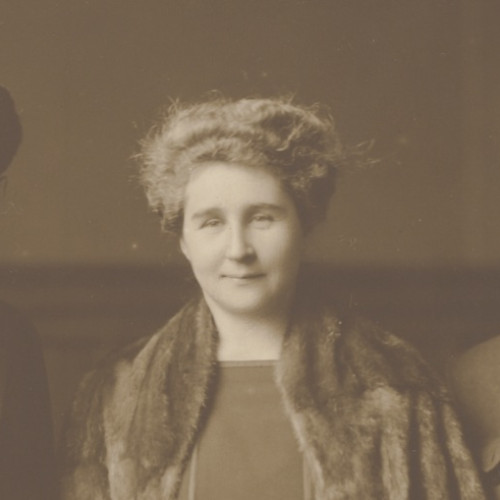
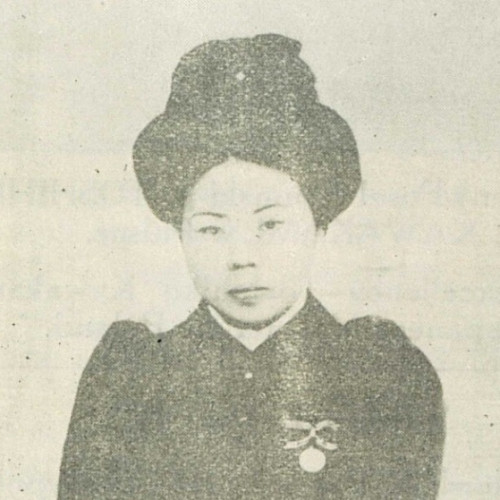
Anna Bielkiewicz, social activist and founder of the Polish Relief Committee for Children of the Far East.
Born in Chyhyryn into the landowning Małynicz family. In 1898, she married Tadeusz Kopystyński of the Leliwa coat of arms, who later became a well-known opera singer. A year later, their only child, a daughter named Halina, was born. In 1904, the family settled in Warsaw, where Anna became involved in helping political prisoners during the strikes of 1905. The marriage ended in divorce shortly afterward. Anna remarried, this time to Wojciech Bielkiewicz, an engineer and bridge builder. In 1914, they moved to Vladivostok.
The outbreak of the revolution in 1917 led Polish refugees to begin arriving in the Far East. In September 1919, the Polish Relief Committee was established in Vladivostok, with Anna Bielkiewicz elected as its president. It was soon decided that children required particular care. An effort was launched to bring orphans and young children living in extreme poverty from Siberia and Manchuria. The Russian Civil War, the Bolsheviks’ seizure of power, and news of Poland’s rebirth prompted Anna Bielkiewicz
and other activists to begin seeking ways to repatriate the children. Members of the organization, later renamed the Polish Relief Committee for Children of the Far East, began an intensive search for funding and evacuation routes.
In the spring of 1920, Bielkiewicz traveled to Tokyo, where she approached the Ministry of Foreign Affairs and the Ministry of War. She obtained permission for the children to enter Japan, as well as support from the Japanese Red Cross. Between 1919 and 1922, a total of 765 Polish children from Siberia arrived in Tokyo and Osaka. Before continuing their journey to Poland, each group spent several months in Japan.
The children recovered their health and rested at facilities run by the Japanese.
At the end of 1922, Bielkiewicz negotiated with the Soviet Military Mission in Beijing for another 117 children to travel to Poland, this time by a route through Moscow. She returned with them to the homeland in 1923. After her return, she continued her efforts to provide the children in her care with the best possible conditions as they entered adulthood. Together with Józef Jakóbkiewicz, she established the Educational Institution for Siberian Children in Wejherowo. Through her efforts, a boarding house for its former pupils was also built in Warsaw. In 1930, she left for the United States. She died in Chicago on 20 October 1936.
"Here, in the Far East of Siberia [...] a relief effort was undertaken, and a Relief Committee was established to bring aid to our compatriots battered by
misfortune, to save Polish children! Who took charge of the Committee? Who
undertook this arduous relief work? It was Leliwa (Anna Bielkiewicz) – the same Leliwa who had once supplied clothing and provisions to groups of political prisoners from the prisons of Warsaw, Modlin, and elsewhere as they were being sent to Siberia [...]. Today, by a strange coincidence of circumstances, Leliwa-Bielkiewicz gathers homeless children and orphans in Siberia, among whom there is more than one child of those very prisoners, our heroes, and, saving them from destruction, returns them to the country.”
J. (former prisoner of Pawiak), Sylwetka [Anny Bielkiewicz], “Okólnik Wydziału
Narodowego Polskiego” 1920, no. 15, p. 12
Photo credit: Jagiellonian Library in Kraków.
See also
- Fumi Matsuzawa

awarded
Fumi Matsuzawa
(1901–1921)A nurse who became a symbol of the dedication shown by the Japanese in caring for Polish children.
- Leif Myklebust
awarded
Leif Myklebust
(1918–1981)In late July and early August 1944, in a mountainous region, together with Erling Berg, they came to the aid of Michał Nowacki, a Polish escapee from the German camp in Fauske.
- Etela Laczuschová
awarded
Etela Laczuschová
(1922–1944)The Kežmarok house was a unique location for Polish couriers and refugees: they could rest and recuperate there, eat a meal, or obtain necessary assistance.