Cooperation between the Pilecki Institute and the Bundesarchiv - Instytut Pileckiego

21.03.2019 (Thu)
Cooperation between the Pilecki Institute and the Bundesarchiv
Key documents of the Bundesarchiv concerning 20th century history will be digitized en masse by the Institute and added to its digital holdings. Plans are also in place to make these copies available in Warsaw.
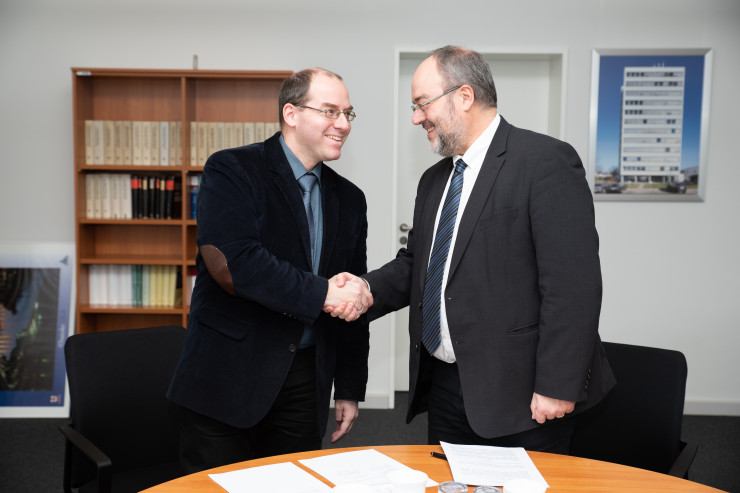
The agreement undersigned by the Pilecki Institute and the Federal Republic of Germany provides for broad cooperation which will allow the Pilecki Institute to digitize en masse key documents from the collections of the Bundesarchiv concerning the 20th century. These digital copies, together with the existing digital database, will be made available in Warsaw, while cooperation with the Institute will also augment the electronic collections of the German Federal Archive.
The Agreement between the Pilecki Institute and the Bundesarchiv is the first and to date only cooperation project of its type to be established by a Polish research institute and the German Federal Archive. In the preamble to the document, we read among others: The history of the 20th century has proved essential and formative for understanding and managing the challenges of contemporary times, and also for building harmony and developing constructive cooperation between the nations of Europe; Access to archival resources and the creation of conditions facilitating collaboration between the young generation of Polish and German scholars are fundamental for guaranteeing the advancement of meaningful research and dialog about the recent past.
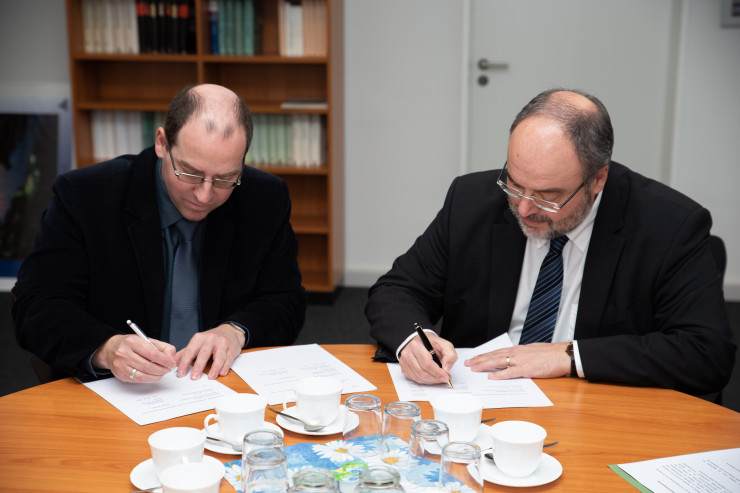
The Agreement is a momentous initiative, and its ultimate objective is the creation by the Pilecki Institute of a digital archive of collections gathered from around the world. Significantly, it provides that already in the present year the Pilecki Institute will obtain digital versions of archival materials that are of key importance for research into the history of the Second World War and the German occupation, as well as the interwar period.
– The Pilecki Institute is commencing the digitization of the Bundesarchiv’s collections from individual of its agencies in Germany – said Wojciech Kozłowski, the Director of the Pilecki Institute.
We are specifically interested in materials concerning the occupation of Poland, with a particular emphasis on those presenting the fates of Poles and Jews during the Second World War.
– The digitization of German archives is the prerequisite for a proper understanding of the 20th century, and especially of the dark period of the Nazi occupation of Europe. Access to archival resources and close cooperation between the Polish and German side are of equally fundamental importance for creating a platform of cooperation and dialog on the common history of our two nations – stressed Kozłowski.
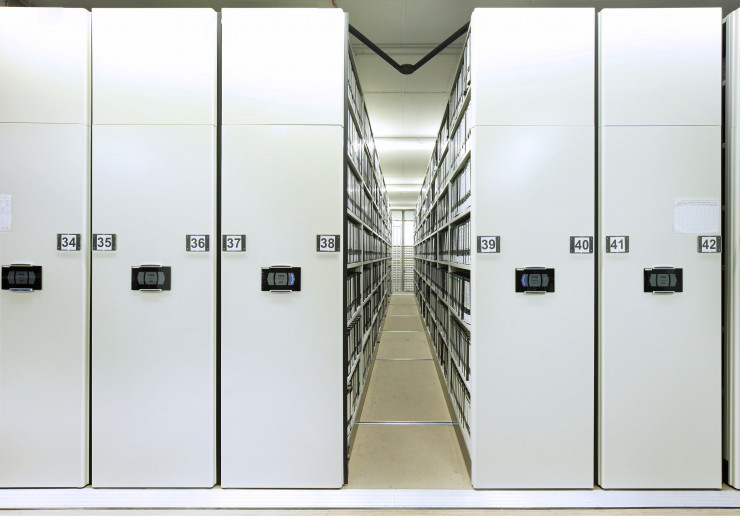
– The very reason why archives exist is to provide access to the documents which they contain, in accordance with currently valid legal provisions – declared the President of the German Federal Archive, Michael Hollmann. – In the age of digitization, archives are much less frequently used at their physical locations.
The digitization of large archival resources by the Pilecki Institute will bring with it numerous benefits. The provision of access to its digitized holdings in Warsaw should further stimulate Polish historical research, while the Federal Archive will gain considerable support for its digitization activities from its partner institution.
Our digital holdings will grow at an even greater pace, and this will be of advantage to all those who use them.
Broad Cooperation
Cooperation between the two institutions will focus on a specific period of history, however the first documents to be digitized will be those concerning the Second World War and the German occupation of Poland. The Pilecki Institute intends to digitize successive batches of materials, and their copies will remain at the Bundesarchiv.
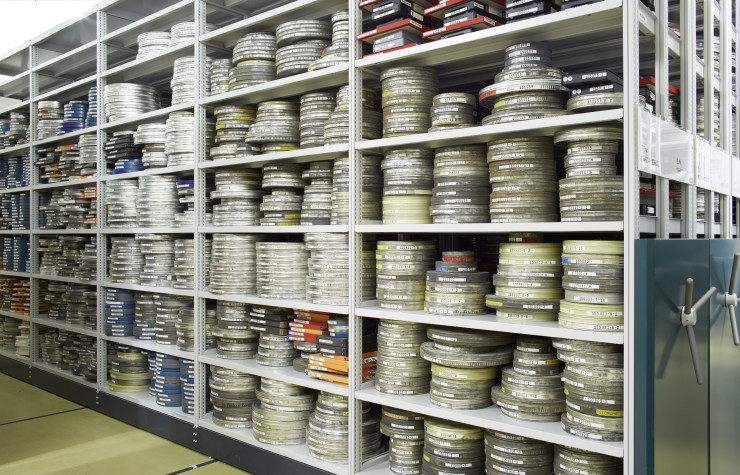
– The copied files will include documents from the Personal Adjutancy of the Reichsführer SS, and also a range of archives concerning the SS and Gestapo – explained Hanna Radziejowska, the Plenipotentiary of the Pilecki Institute for Polish-German Cooperation. – Furthermore, the Institute will receive administrative and economic documents generated on former territories of the German Third Reich – Radziejowska added. – It should be noted that we are currently analyzing and cataloging prewar video materials which are held in the German archives. Working jointly with a team of researchers from the Institute and our partners from the Bundesarchiv, we are determining the order in which these materials will be digitized.
– Polish scholarship has significant achievements in research into the history of National Socialist Germany and Nazi occupation policy. From the 1990s, however, interest has shifted eastwards, with considerable emphasis being placed on the study of Soviet policy. This is understandable following the long years when it was a taboo subject. – said Professor Piotr Madajczyk, a historian from the Unit of German Studies at the Institute of Political Studies of the Polish Academy of Sciences in Warsaw. – Nevertheless, Polish research into the history of the Third Reich has started to lag behind that conducted in other countries, which is proceeding at pace. Recent years have brought a change, while now the availability of materials from the Bundesarchiv will act as an impulse for every Polish historian to intensify research. And I am not concerned here with just the documentation of members of the NSDAP, which was most readily touched upon in the media. Of equal importance are the materials concerning administrative and economic affairs, for they too require a considerable amount of research. The importance of the documentation pertaining to the Reichsführer SS does not even need to be mentioned – he added.
A Source of Knowledge for Researchers
The Pilecki Institute plans to conduct a comprehensive study of these sources, and also make them available to interested scholars.
– Access to these collections and materials will allow us to organize international research seminars, grants and scholarships – informed Wojciech Kozłowski. – One of our primary objectives is to embark on a combined study of the collections contained in German archives and of Polish sources devoted to the occupation of Poland. We take care to ensure that historical truth about the Second World War is founded on a broad and suitably verified source base. The conclusion of the agreement between the Pilecki Institute and the Bundesarchiv is an important step towards a more meaningful and detailed study of our historical experience. It presents us with an extraordinary opportunity to achieve a better understanding of the context, circumstances and realities of the German occupation – added the Director of the Pilecki Institute.
Bundesarchiv
The Federal Archive has in its holdings documents that are of the greatest importance for researchers of German modern and recent history. They include files, individual documents, maps, photographs, posters, films and sound recordings, both analog and digital, authored by the central institutions of the Federal Republic of Germany and its legal predecessors. The role of the archive is both to secure these resources and make them available pursuant to the provisions of the Federal Archive Act. Presently, the Bundesarchiv has nine agencies throughout Germany, in which there are stored approx. 400 km of documents, 13 million photographs and 2 million maps and plans. Furthermore, the Federal Archive is one of the largest repositories of video materials, with an imposing collection of German-language feature films and documentaries.
The Pilecki Institute
The Pilecki Institute is a research center set up with the objective of conducting international research into 20th century history and creating a digital repository of documents from both Polish and foreign archives. It was established to commemorate, document and study the history of the 20th century, with particular emphasis on the experience of Poland and the fate of Polish citizens. The Pilecki Institute has been established to facilitate an interdisciplinary and international analysis of issues and developments that were of key importance for the political history of the period, these being the Nazi and Soviet totalitarianisms and the global consequences of their actions.
See also
- „Soviet Central Asia as a Totalitarian Testing Ground” - international academic conference
News
„Soviet Central Asia as a Totalitarian Testing Ground” - international academic conference
Three days, dozens of presentations, and researchers from Poland and abroad summed up the international academic conference held at the Pilecki Institute in Warsaw on 2–4 September.
- The hitherto unknown memoirs of a German official from occupied Poland have been donated to the Pilecki Institute
News
The hitherto unknown memoirs of a German official from occupied Poland have been donated to the Pilecki Institute
A unique document has been added to the Pilecki Institute’s archives: the previously unpublished and unknown memoirs of a German official who worked in the civil administration of the General Government during the Second World War.
- Evil Woven into Everyday Life | Dr Joanna Nikel on the Memoirs of a German Official from His Stay in the General Government
News
Evil Woven into Everyday Life | Dr Joanna Nikel on the Memoirs of a German Official from His Stay in the General Government
"It is rare for a document to find its way into archival collections in which the voice of an official of the occupation apparatus himself – written down without any intention of accusation, and even stressing his own sense of normality – becomes one of the most eloquent testimonies to the criminal nature of the system he served", writes Dr Joanna Nikel in her initial commentary on the materials received by the Pilecki Institute.
- 14 books nominated for this year’s Witold Pilecki International Book Award
News
14 books nominated for this year’s Witold Pilecki International Book Award
On Saturday, 5 September, at the Autumn Book Fair in Warsaw, the Pilecki Institute announced the titles and authors of 14 books nominated for this year’s Witold Pilecki International Book Award.
- New Jork | Exhibition: Between Life and Death. Stories of Rescue during the Holocaust
News
New Jork | Exhibition: Between Life and Death. Stories of Rescue during the Holocaust
Through October 29, the Pilecki Institute in New York is hosting an exhibition about the people who risked their own lives to save Jews during the Holocaust—and those who survived thanks to their courage.
- „Soviet Central Asia as a Totalitarian Testing Ground” - international academic conference
News
„Soviet Central Asia as a Totalitarian Testing Ground” - international academic conference
The international academic conference organized by the Pilecki Institute is the first initiative in Poland to bring together interdisciplinary research on Soviet Central Asia, a region with an exceptionally complex history of totalitarianism, mass repression, and forced deportations, that also include the experiences of Poles.
- Karol Madaj appointed Director of the Witold Pilecki Institute of Solidarity and Valor
News
Karol Madaj appointed Director of the Witold Pilecki Institute of Solidarity and Valor
Marta Cienkowska, the Minister of Culture and National Heritage, has appointed Karol Madaj Director of the Witold Pilecki Institute of Solidarity and Valor in Warsaw. His five-year term will begin on 30 August 2026. From 1 September 2025, Karol Madaj served as the acting director of the Pilecki Institute.
- Hacker attack on the websites of the Pilecki Institute in Warsaw, Berlin, and Augustów
News
Hacker attack on the websites of the Pilecki Institute in Warsaw, Berlin, and Augustów
On the night of August 13–14 our websites suffered another serious hacking attack. Content bearing the hallmarks of Russian propaganda and disinformation — targeting Polish history and reinforcing anti-Ukrainian narratives — was deliberately placed on the Institute's pages devoted to Augustów, Berlin, and Warsaw.
- Academic conference “Oppositional Engagement of Women in Authoritarian and Totalitarian Systems of the 20th Century: Poland in a Comparative European Perspective (1919–1989)”
News
Academic conference “Oppositional Engagement of Women in Authoritarian and Totalitarian Systems of the 20th Century: Poland in a Comparative European Perspective (1919–1989)”
The second academic conference in a series “Oppositional Engagement of Women in Authoritarian and Totalitarian Systems of the 20th Century: Poland in a Comparative European Perspective (1919–1989)” brought together representatives of various fields of the humanities and social sciences from numerous research centers in Poland and abroad.
- Accountability for War Crimes. New book from Pilecki's expert
News
Accountability for War Crimes. New book from Pilecki's expert
It is an expanded English-language edition of the monograph "Problem odpowiedzialności karnej za zbrodnie wojenne w pracach rządu polskiego na emigracji (1939–1945)", which in 2023 was awarded a grant under the Ministry of Science and Higher Education’s “Excellent Science II” program for the translation and open-access publication of the book abroad.
- 12 July | Day of Remembrance for the Victims of the Augustów Roundup
News
12 July | Day of Remembrance for the Victims of the Augustów Roundup
12 July is celebrated as the National Day of Remembrance for the Victims of the Augustów Roundup. The roundup began 81 years ago on this day – on 12 July 1945, two months after the end of the Second World War.
- The Volhynian Crime: The Pilecki Institute and its scholarly and research activities
News
The Volhynian Crime: The Pilecki Institute and its scholarly and research activities
On the Sunday of 11 July 1943, units of the Ukrainian Insurgent Army, the armed wing of the Organization of Ukrainian Nationalists (Stepan Bandera faction) – a radical fascist organization striving to build an independent Ukrainian state without any national minorities – carried out a coordinated attack on almost a hundred Polish settlements in the German-occupied Volhynian Voivodeship of the Second Polish Republic.