On better protection against crimes against humanity: Summary of the international conference “The Roots of Crimes Against Humanity” - Instytut Pileckiego

30.04.2026 (Thu)
On better protection against crimes against humanity: Summary of the international conference “The Roots of Crimes Against Humanity”
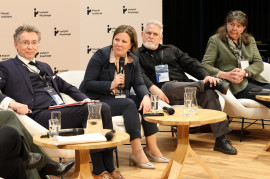
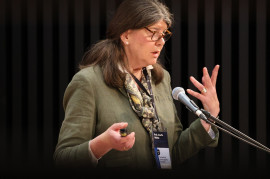
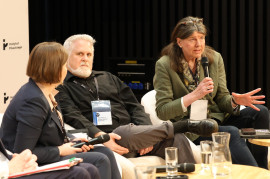
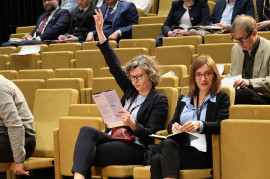
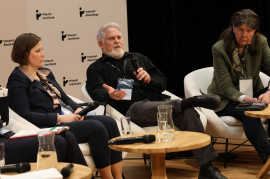
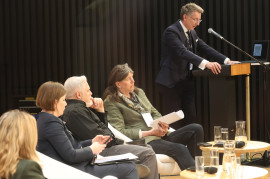
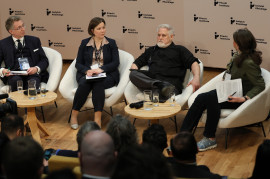
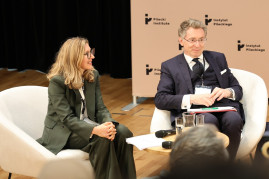
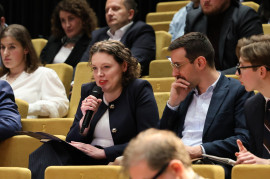
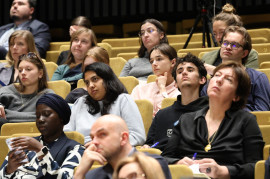
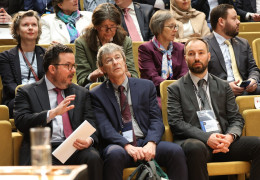
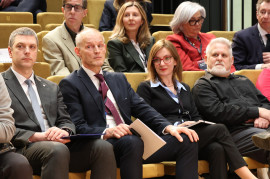
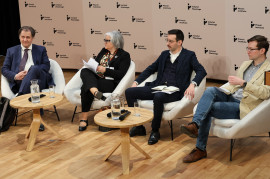
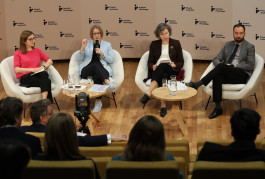
The international conference “The Roots of Crimes Against Humanity: Bridging the Normative Gap” successfully concluded at the Pilecki Institute in Warsaw. Organized on the 20th and 21st of April 2026, in cooperation with the Polish Ministry of Foreign Affairs, the event aimed to provide historical and academic foundations for the first-ever United Nations Convention on the Prevention and Punishment of Crimes Against Humanity.

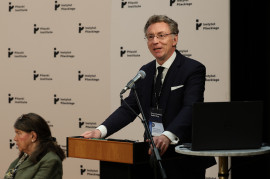
The conference’s location at the Pilecki Institute is deeply symbolic. Karol Madaj, Acting Director of the Pilecki Institute, highlighted how the life of the Institute’s patron informs its current diplomatic and academic mission.
“I firmly believe that it is the Pilecki Institute’s obligation to take an active role in the regional preparations for the adoption of the Convention on the Prevention and Punishment of Crimes Against Humanity, bearing in mind the life and legacy of our patron. I am extremely honored and delighted that the Institute has been able to organize this conference in cooperation with the Polish Ministry of Foreign Affairs. Our cooperation is important for two reasons.


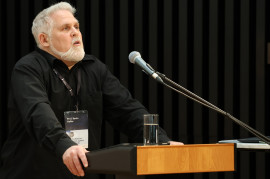
The proceedings on April 20 focused on the historical evolution of legal concepts. Following an opening ceremony, Prof. Guénaël Mettraux delivered a keynote lecture on the origins of the concept of crimes against humanity.

“While genocide and war crimes are clearly regulated under international law, crimes against humanity still lack a comprehensive, binding global convention. This absence has tangible consequences. The legal framework remains fragmented, relying on customary law, differing national systems and international tribunals created on a case-by-case basis. As a result, justice is too often selective and incomplete. Cooperation between states is more difficult than it should be. And crucially, we still lack effective tools to prevent these crimes. A dedicated convention would provide clarity, consistency and predictability. These are essential not only for accountability, but also for prevention” – Zajączkowski explained.
The importance of Warsaw’s conference
The first day’s discussions served as a bridge between historical analysis and modern treaty negotiations. Ambassador Franz Perrez, Director General of the Directorate of Public International Law of the Swiss Federal Department of Foreign Affairs, underscored the importance of the conference’s timing - just days before the April 30 deadline for Member States to submit official observations to the UN.
The second day of the conference was dedicated to the evaluation of the legal protection of vulnerable groups and the strategic requirements for the proposed international treaty. The morning schedule began with a panel on “Targeted groups,” focusing on victimization in historic trials, as well as children and women as specific targets of crimes against humanity. The second panel, “Different faces of the crime against humanity,” examined the legal and historical dimensions of slavery, forced labor, deportations, and persecutions, including a historical perspective on colonial Africa.
The afternoon sessions addressed the “Consequences of the crime against humanity,” specifically the reshaping of police trials and the crucial issue of reparations for victims. The event culminated in a high-level panel dedicated to establishing robust global standards. Titled “Towards the new Convention,” it featured Ambassador Franz Perrez and Paweł Wierdak, Legal Advisor to the Polish Ministry of Foreign Affairs. Discussing how to mitigate the risk of a weak treaty, Wierdak and Perrez agreed that the threat of a vote is a tool for better consensus.
“It doesn’t make sense to strive for consensus with someone who just doesn’t share the same objective (…) the only way to seriously be able to strive for consensus is by being clear: if you do not honestly try to find a solution, then we are going to vote” – said Franz Perrez.
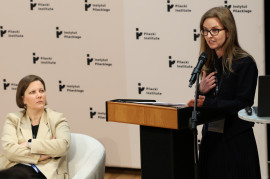
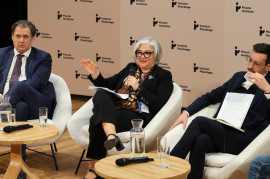
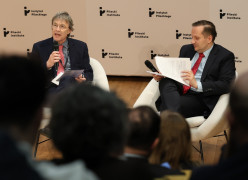
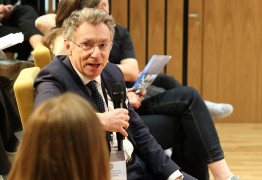
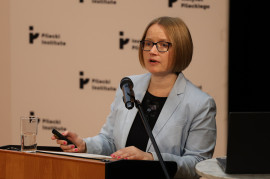
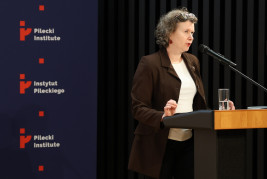
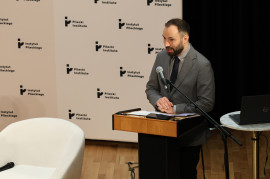
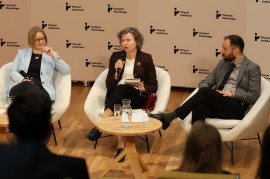
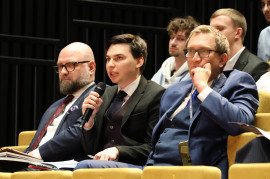
A video footage from the live stream (both days) is also available:
Day 1
Day 2
Photos by Karolina Szatkowska, Pilecki Institute
See also
- Karol Madaj appointed Director of the Witold Pilecki Institute of Solidarity and Valor
News
Karol Madaj appointed Director of the Witold Pilecki Institute of Solidarity and Valor
Marta Cienkowska, the Minister of Culture and National Heritage, has appointed Karol Madaj Director of the Witold Pilecki Institute of Solidarity and Valor in Warsaw. His five-year term will begin on 30 August 2026. From 1 September 2025, Karol Madaj served as the acting director of the Pilecki Institute.
- Hacker attack on the websites of the Pilecki Institute in Warsaw, Berlin, and Augustów
News
Hacker attack on the websites of the Pilecki Institute in Warsaw, Berlin, and Augustów
On the night of August 13–14 our websites suffered another serious hacking attack. Content bearing the hallmarks of Russian propaganda and disinformation — targeting Polish history and reinforcing anti-Ukrainian narratives — was deliberately placed on the Institute's pages devoted to Augustów, Berlin, and Warsaw.
- Academic conference “Oppositional Engagement of Women in Authoritarian and Totalitarian Systems of the 20th Century: Poland in a Comparative European Perspective (1919–1989)”
News
Academic conference “Oppositional Engagement of Women in Authoritarian and Totalitarian Systems of the 20th Century: Poland in a Comparative European Perspective (1919–1989)”
The second academic conference in a series “Oppositional Engagement of Women in Authoritarian and Totalitarian Systems of the 20th Century: Poland in a Comparative European Perspective (1919–1989)” brought together representatives of various fields of the humanities and social sciences from numerous research centers in Poland and abroad.
- Accountability for War Crimes. New book from Pilecki's expert
News
Accountability for War Crimes. New book from Pilecki's expert
It is an expanded English-language edition of the monograph "Problem odpowiedzialności karnej za zbrodnie wojenne w pracach rządu polskiego na emigracji (1939–1945)", which in 2023 was awarded a grant under the Ministry of Science and Higher Education’s “Excellent Science II” program for the translation and open-access publication of the book abroad.
- 12 July | Day of Remembrance for the Victims of the Augustów Roundup
News
12 July | Day of Remembrance for the Victims of the Augustów Roundup
12 July is celebrated as the National Day of Remembrance for the Victims of the Augustów Roundup. The roundup began 81 years ago on this day – on 12 July 1945, two months after the end of the Second World War.
- The Volhynian Crime: The Pilecki Institute and its scholarly and research activities
News
The Volhynian Crime: The Pilecki Institute and its scholarly and research activities
On the Sunday of 11 July 1943, units of the Ukrainian Insurgent Army, the armed wing of the Organization of Ukrainian Nationalists (Stepan Bandera faction) – a radical fascist organization striving to build an independent Ukrainian state without any national minorities – carried out a coordinated attack on almost a hundred Polish settlements in the German-occupied Volhynian Voivodeship of the Second Polish Republic.
- Announcement
News
Announcement
The Witold Pilecki Institute of Solidarity and Valor, the sole shareholder of Pilecki Institute (USA), Inc., announces that the Board of Directors has appointed Jack Fairweather as the interim President (CEO) of Pilecki Institute (USA), Inc., effective as of 18 June 2026. His task will be to expand the program strategy in line with the statutory mission of the Pilecki Institute’s New York branch.
- The MODEERN FREEDOM exhibition at the Pilecki Institute NYC is now open!
News
The MODEERN FREEDOM exhibition at the Pilecki Institute NYC is now open!
The largest group presentation of Polish contemporary art in New York since MoMA’s legendary “Fifteen Polish Painters” exhibition in 1961.
- The Witold Pilecki International Book Award for historical books. Applications accepted only until the end of June!
News
The Witold Pilecki International Book Award for historical books. Applications accepted only until the end of June!
The Pilecki Institute is accepting applications for the Witold Pilecki International Book Award until the end of June. The competition, now in its sixth year, is organized with the participation of the Patron’s Family and in partnership with the Auschwitz-Birkenau State Museum.
- April 30 Deadline: Poland Proposes "Child-Sensitive Approach" for New UN Convention
News
April 30 Deadline: Poland Proposes "Child-Sensitive Approach" for New UN Convention
Beginning with today’s (April 30) deadline for all nations to submit their official comments to the United Nations on the draft of the proposed Convention on the Prevention and Punishment of Crimes Against Humanity, Poland has made an aggressive bid to become one of the leaders representing the globe’s most vulnerable victims.
- Recap of the 5th edition of the Pilecki Institute International Teachers and Educators Program (ITEP)
News
Recap of the 5th edition of the Pilecki Institute International Teachers and Educators Program (ITEP)
This year's online conference focused on the post-war decade of 1945–1955 – a time of rebuilding devastated countries, the beginning of the Cold War, and the birth of a new international order.
- Belarusian opposition leader Sviatlana Tsikhanouskaya visits the Augustów Roundup Memorial House
News
Belarusian opposition leader Sviatlana Tsikhanouskaya visits the Augustów Roundup Memorial House
On 22 April 2026, Sviatlana Tsikhanouskaya, leader of the Belarusian democratic opposition, visited the Augustów Roundup Memorial House.