Commemoration of Rozalia Socha, Murdered for Helping Jews During the German Occupation | Called by Name - Instytut Pileckiego

Commemoration of Rozalia Socha, Murdered for Helping Jews During the German Occupation | Called by Name
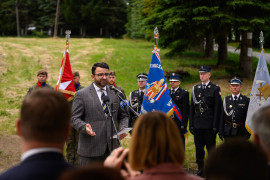
On 2 June 2026, in Wola Rafałowska near Rzeszów, the Pilecki Institute unveiled a stone with a plaque commemorating Rozalia Socha, who in 1942 was murdered by the Germans for hiding a group of Jews: Izaak, Fajga, and Regina Goldman, as well as two women and three children. This was the 41st commemoration held as part of the “Called by Name” program.
Wola Rafałowska 1942
Rozalia Socha, who lived alone in her home in Wola Rafałowska, hid as many as 10 Jews at various times. On 13 September 1942, following a denunciation by a Polish collaborator, the Germans discovered the hiding place. Rozalia Socha was not at home at the time. The occupiers murdered six of the eight people in hiding. Regina and Fajga Goldman managed to escape and survived the war. On 19 December of the same year, German gendarmes returned to the village, found Rozalia Socha, and murdered her with a shot to the back of the head.
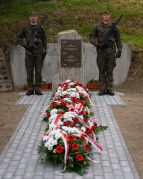
Stone of remembrance
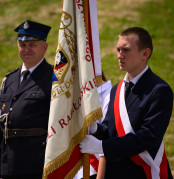
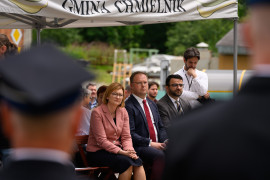
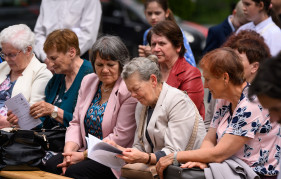
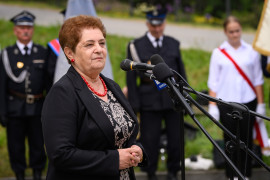
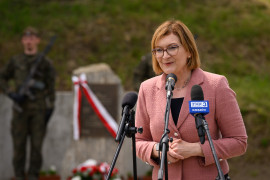
Taking part in the commemorative ceremony were Karol Madaj, acting director of the Pilecki Institute; Ewa Leniart, member of the Sejm of the Republic of Poland; Karol Ożóg, Deputy Marshal of the Podkarpackie region; Krzysztof Jarosz, Governor of Rzeszów County; Krzysztof Grad, mayor of the Chmielnik municipality; Danuta Szajna from the “Nasza Wola” Association; as well as representatives of local governments, the Volunteer Fire Department, and young people.
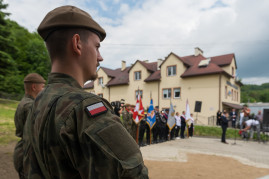
An honor guard was provided by soldiers from the 3rd Podkarpackie Territorial Defense Brigade.

The event was organized in cooperation with the Governor of Rzeszów County, the “Nasza Wola” Association for the Promotion and Development of the Village of Wola Rafałowska, and the Mayor of the Chmielnik Municipality. The unveiling ceremony was preceded by a Holy Mass at the Roman Catholic Church of the Holy Trinity and the Exaltation of the Holy Cross.
A test of humanity
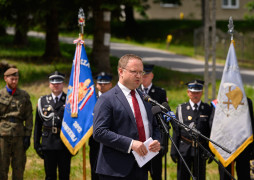
Karol Madaj, acting director of the Pilecki Institute, recalled that despite her modest circumstances, Rozalia took three families under her roof.

“What moves me deeply in this story is the fact that despite the murder that took place here, despite the danger that lurked every day, the residents of Wola Rafałowska, like Rozalia Socha, passed the test of humanity. Regina and Fajga Goldman hid in Wola Rafałowska and the surrounding area until the end of the war. They survived the war here,” said Karol Madaj.
He also added that thanks to Rozalia Socha’s sacrifice, further generations were able to be born. “In a moment, we will read a letter from the son of Fajga Goldman. There would be no such letter, there would be no subsequent generations, were it not for this community, were it not for this brotherhood in humanity represented by Rozalia Socha.”

She was not forgotten
Tadeusz Bujak, representing Rozalia Socha’s family, emphasized that this was a moment of great breakthrough after decades of silent pain and fear.
“Seeing this commemorative stone, we now know for certain: Rozalia has not been forgotten. Her sacrifice was not in vain,” said her relative.
He also addressed the young people present. “Do not be indifferent. Indifference is the quietest form of consent to evil. By unveiling these plaques of remembrance, we are relaying values down to you.”
Quiet, selfless courage
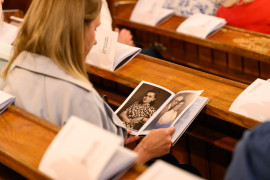
During the ceremony, a letter was also read from the son of the rescued Fajga Goldman, who expressed gratitude and recognition for Rozalia Socha’s courage.
“She opened her home and her heart to many Jews fleeing the Nazis, including my late blessed mother, hiding them at enormous personal risk, at a time when discovery of this act meant certain death. She did not act for recognition or reward. She acted because she believed that human life was worth protecting,” wrote the survivor’s son.
Jan Łazicki, the Ministry of Foreign Affairs’ Plenipotentiary for Contacts with the Jewish Diaspora, wrote to the participants of the event: “Today’s ceremony is an obligation for all of us: to safeguard historical truth and to oppose hatred and indifference. To teach future generations that even in the most inhuman times, it is possible to remain human.”
The story of Rozalia Socha of Wola Rafałowska and the Goldman Family
Rozalia Socha, born in 1886, lived alone in a small house by the main road in Wola Rafałowska near Rzeszów, now part of the Chmielnik municipality. In the summer of 1942, after the Germans began gathering the Jewish residents of nearby villages in ghettos and then deporting them to Rzeszów, Rozalia gave shelter to people she knew: the Goldman siblings, Regina and Izaak, and their niece, Fajga. At the same time, a group of Jews from Albigowa whose surnames are unknown was also hiding there. In total, Rozalia Socha may have sheltered as many as 10 people at various times.
As a result of a denunciation by a local collaborator, Antoni B., occupation officials discovered the hiding place on 13 September 1942. Of the eight Jews then staying on the property, Regina and Fajga Goldman managed to escape. The Germans murdered Izaak Goldman, as well as two women and three children whose names are unknown, several dozen meters from the house.
The homeowner was not present at the time, but she was placed on a list of nine village residents designated for execution. On 19 December 1942, again accompanied by the traitor Antoni B., German gendarmes came to Wola Rafałowska and found Rozalia Socha. They led her near the grave of the Jews she had hidden and shot her there. That day, they also murdered two other village residents from the list. The Germans warned the local population that if any harm came to the collaborator, they would shoot 20 residents in retaliation.
Regina Goldman and her niece Fajga survived. At first, their paths separated: Regina survived in the Wola Rafałowska area, while Fajga survived in Gać near Markowa. Immediately after the war, in a displaced persons camp in Bindermichl, Austria, Regina Goldman married another survivor from the Wola Rafałowska area, Nathan Beim. Together with Fajga, they left for the city of London in Ontario, Canada. Nathan ran a tailoring workshop there and died in 1998. Regina “Ryfcia” died in 1982. Fajga married in the 1950s. She died in 1999.
The German collaborator Antoni B. was shot after liberation in 1945 by the militia while attempting to escape from custody.
After the execution, Rozalia Socha’s body was secretly exhumed and buried in the cemetery in Wola Rafałowska. In 2019, her gravestone was renovated thanks to the efforts of the “Nasza Wola” Association for the Promotion and Development of the Village of Wola Rafałowska. The road to the grave was also marked.
Historical workshops with young people
In keeping with the principles of the “Called by Name” program, classes were held at the local school as part of the commemoration, during which students learned about the circumstances of the tragic story of Rozalia Socha and the Jews she rescued in the broader context of the events of the Second World War, including the Holocaust. The workshop participants were introduced primarily to historical sources, which they jointly analyzed and interpreted with the support of a representative of the Education Department of the Pilecki Institute.

The “Called by Name” Program
Rozalia Socha is the 103rd person commemorated as part of the “Called by Name” program, carried out by the Pilecki Institute since 2019. This program, which is central to the Institute’s mission, is dedicated to honoring citizens of the Second Polish Republic who were murdered for helping people of Jewish nationality during the Second World War. It combines historical research, educational activities, and commemorations in public space. Its culminating moment is the unveiling of a commemorative plaque placed on a stone, recalling the names and surnames of both the rescuers and the rescued, insofar as their identities have been established, and restoring their stories to their rightful place in collective memory. Through educational and popularization activities, including in schools, community centers, and libraries, the stories of the “Called by Name”, often forgotten for many years, are subsequently restored to the awareness of local communities.