The commemoration of Jakub Tokarz who was murdered for helping Jews during the German occupation | CALLED BY NAME - Instytut Pileckiego

The commemoration of Jakub Tokarz who was murdered for helping Jews during the German occupation | CALLED BY NAME
On 28 October 2025, in Biedaczów near Leżajsk, a stone with a commemorative plaque was unveiled in honor of Jakub Tokarz – a resident of the village who paid the ultimate price for sheltering the Jewish Rimler family during the Second World War. He is the hundredth person to be honored as part of the “Called by Name” program.
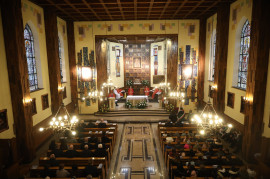
The ceremony began at 11:00 a.m. in the Roman Catholic Church of Our Lady of Consolation in Gwizdów. The Holy Mass offered for the intention of Jakub Tokarz was celebrated by His Excellency Bishop Marian Rojek, the diocesan bishop of Zamość–Lubaczów.
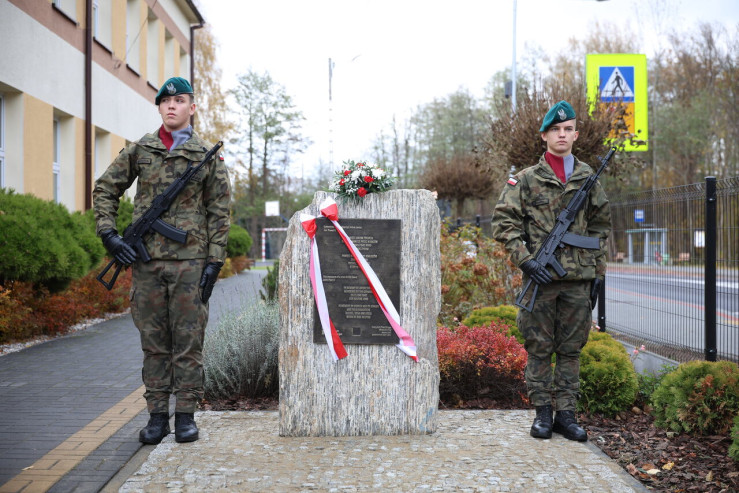
The main part of the event took place by the newly unveiled memorial plaque located on the grounds of St. John Cantius Elementary School in Biedaczów. Among those present were representatives of the event’s organizers and partners: Acting Director of the Pilecki Institute Karol Madaj and Deputy Director Łukasz Mieszkowski; representatives of the Leżajsk Starost Zdzisław Leśko; Mayor of Leżajsk Commune Krzysztof Sobejko; and the Headmaster of St. John Cantius Elementary School in Biedaczów Stanisław Panek.
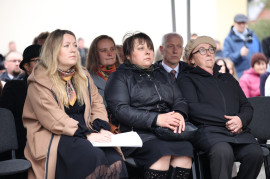
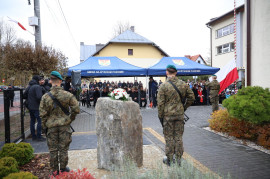
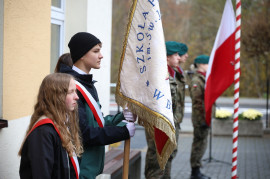
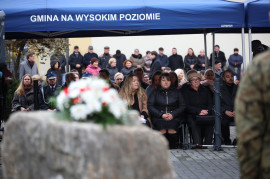
Distinguished guests also attended the ceremony, including representatives of the national and local government, the clergy, uniformed services, and cultural and academic institutions. Among them were: Deputy Marshal of the Podkarpackie Voivodeship Karol Ożóg; Member of the Podkarpackie Regional Assembly Marek Ordyczyński; representatives of MP Kazimierz Gołojuch; Member of the Board of Leżajsk District Wanda Rakszawska-Stopyra; Secretary of Łańcut District Robert Kochman; Vice-Chair of Leżajsk District Council Magdalena Niemczyk; Chair of the Leżajsk Commune Council Łukasz Fleszar; and Ordinary of the Diocese of Zamość–Lubaczów His Excellency Bishop Marian Rojek.
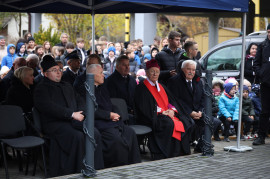
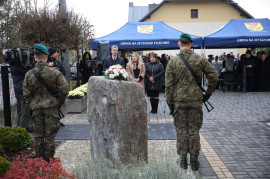
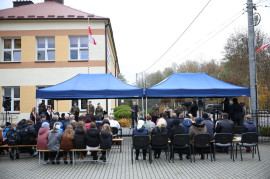
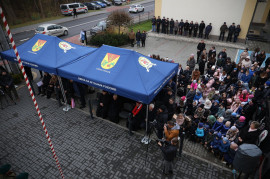
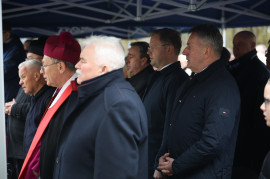
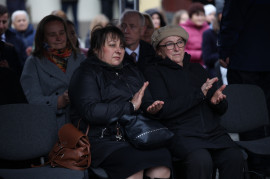
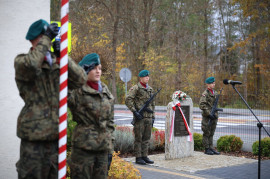
Of particular importance was the presence of relatives of those commemorated under the Pilecki Institute’s “Called by Name” program, including members of Jakub Tokarz’s family: the honoree’s great-granddaughter Sylwia Dąbek, and Krystyna Tokarz, the wife of his grandson. The event was further attended by youth from the Rifle Unit of Leżajsk and the standard bearers of St. John Cantius Elementary School in Biedaczów.
The first to speak was Acting Director of the Pilecki Institute Karol Madaj, who recalled Jakub Tokarz’s heroism. Despite the enormous risk, he chose to help those who had been condemned to certain death, he said. He also emphasized that the mission of the “Called by Name” program is to preserve the memory of both the rescuers and those they rescued.
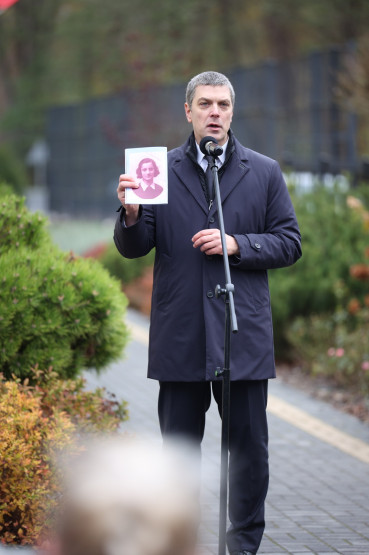
The history of these two communities – the Christian and the Jewish – intertwines in the story we commemorate today in a tragic way. It is also worth remembering those whom Jakub Tokarz sought to save, for whom he gave his life, said Director Madaj.
Speaking on behalf of the family of Jakub Tokarz was his great-granddaughter, Sylwia Dąbek. This is a deeply moving moment for us, she said.
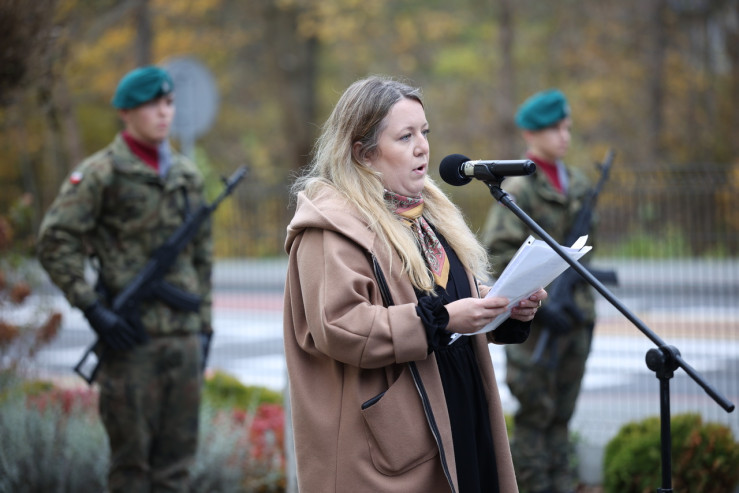
Jakub Tokarz was a simple, ordinary man – farmer, neighbor, father and husband – but in a time of war he accomplished something extraordinary: he sheltered a Jewish family he knew, fully aware that he might pay for it with his life, she said in regard to the heroism of her great-grandfather, who preserved his humanity in inhuman times.
The honoree’s great-granddaughter also thanked the organizers, partners, and guests of the event for jointly cultivating the memory of a story marked by extraordinary courage, love, and sacrifice.
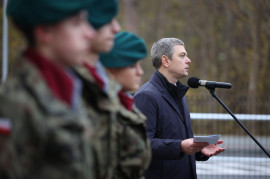
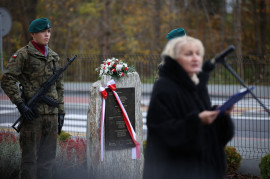
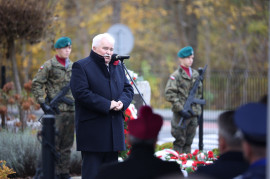
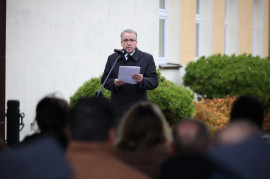
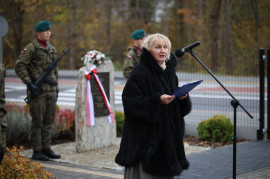
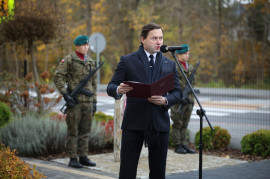
Next, Marek Ordyczyński, Member of the Podkarpackie Regional Assembly, read a letter to the participants from the Governor of the Podkarpackie Region, Teresa Hubas-Kul. The memory of Jakub Tokarz not only recalls a tragic story but, above all, is a testimony to an unyielding stance and moral strength that have withstood the test of time. The value of his deed obliges us to preserve historical truth and pass it on to future generations, the Governor wrote.
Wanda Rakszawska-Stopyra, Member of the Board of Leżajsk District, speaking on behalf of the district starost, emphasized that Jakub Tokarz joins the ranks of those “called by name” – Poles murdered by the German occupiers for helping Jews condemned to extermination. As we stand today before his name engraved on the plaque, we pay him tribute, she said. Not only on behalf of our community, but also on behalf of those he could not save, and those who survived thanks to people like him.
The Mayor of Leżajsk Commune, Krzysztof Sobejko, thanked the Pilecki Institute and the event’s partners, stressing that the memorial’s placement by the school is the best possible location for preserving the memory of the Tokarz and Rimler families within the local community.
The Deputy Director of the Pilecki Institute, Łukasz Mieszkowski, read a letter from the Deputy Prime Minister and Minister of National Defense, Władysław Kosiniak-Kamysz: The plaque unveiled today is an expression of our enduring remembrance of the tragedy of war and of those who risked their lives to save others from the Holocaust. Let us build our future on mutual respect and on the memory of heroes, the Deputy Prime Minister wrote.
The final speaker was the host of the ceremony, the Headmaster of St. John Cantius Elementary School in Biedaczów, Stanisław Panek. He underlined the importance of the monument for future generations. There is no better place than a school – where attitudes are shaped and history is passed on – for this memory to be preserved, he said. Our school bears the name of St. John Cantius, whose message is to help one’s neighbor. The stance of today’s hero, Jakub Tokarz, fits into that tradition.
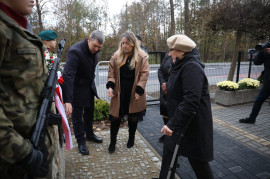
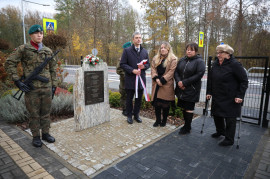
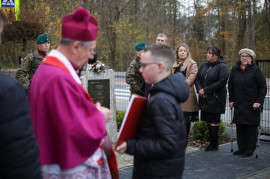
After the speeches, the Acting Director of the Pilecki Institute Karol Madaj, together with members of the honoree’s family, including his great-granddaughter Sylwia Dąbek and Krystyna Tokarz, the wife of his grandson, unveiled the commemorative plaque. Bishop Marian Rojek then blessed the memorial site.
Following the blessing, representatives of the national and local governments and of various nationwide and local institutions present at the ceremony laid flowers before the stone honoring Jakub Tokarz. The first wreath laid was one sent especially for the occasion by the Speaker of the Sejm of the Republic of Poland, Szymon Hołownia.
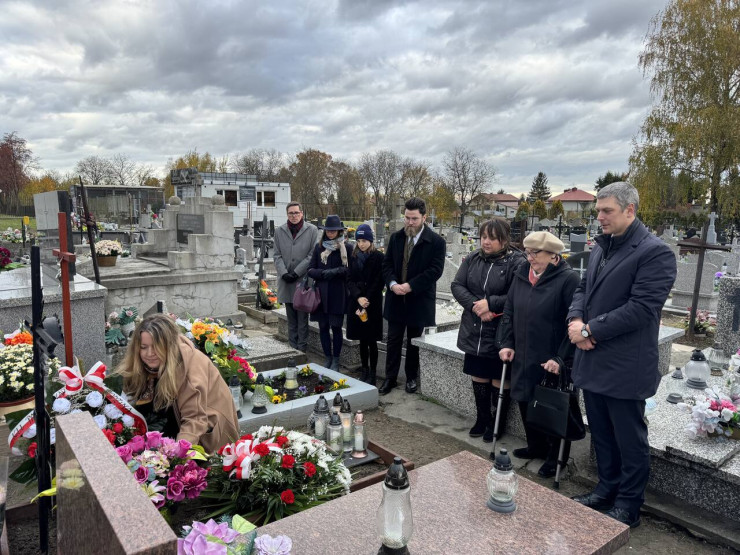
After the commemoration ceremony, Acting Director Karol Madaj joined the staff of the Institute and accompanied members of the family – including Sylwia Dąbek, great-granddaughter of Jakub Tokarz, and Krystyna Tokarz, wife of his grandson – to lay flowers on Jakub Tokarz’s grave at the municipal cemetery in Leżajsk.
Event organizers: Pilecki Institute, Leżajsk District, Leżajsk Commune
Event partner: St. John Cantius Elementary School in Biedaczów
A brief history of Jakub Tokarz and his family
I testify to what I saw with my own eyes: I was walking to Leżajsk and saw German Gestapo at the cemetery next to the road; beside them stood Jakub Tokarz, and at that very moment he was shot.
Testimony of Jan K., 27 July(?) 1966, AŻIH 301/6312
During the German occupation, Jakub Tokarz lived with his wife Maria (née Chrzan), and their six children in the village of Biedaczów, in the Jarosław County of the General Government’s Kraków District. The family ran a farm located near the forest.
In May 1942, Hersch Rimler arrived at the Tokarz farm seeking refuge with his wife Ita and their three daughters Ruchla, Hena, and Adela. Shortly thereafter, Ita and Adela left the household in search of shelter elsewhere. The remaining three hid in the farm outbuildings.
In the first days of June 1942, following a denunciation, two German gendarmes from Leżajsk arrived at the Tokarz property. One searched the house, the other the farm buildings. The Jews hiding in the barn were discovered. Hersch and his daughters were taken to Giedlarowa along with Jakub. The Jews were murdered there, and Jakub was taken to Leżajsk. Ita and Adela were caught by the Germans and murdered soon afterward. After several days in detention at the arrest facility housed in the building of the Magistrates’ Court, Jakub Tokarz was led out to the cemetery in Leżajsk on 11 June 1942 and shot by German gendarmes.
After a few days, a neighbor likely informed gendarmes passing through the village that my father was sheltering Jews. When the gendarmes arrived, they found the Rimler family during their search and took them and my father to the station in Giedlarowa. My mother went to Giedlarowa to look for him and she learned that the Jews had been shot in the forest in Giedlarowa, while my father had been executed on 11 June 1942 at the cemetery in Leżajsk.
Testimony of Józef Tokarz, son of Jakub, n.d., AYV M.31/3763 p. 6
In 1988, Jakub Tokarz was honored with the title of Righteous Among the Nations. His name is inscribed at Yad Vashem among those who risked their lives to save Jews from extermination.
Details of the history of Jakub Tokarz and his family, as well as of Hersch Rimler and his family, can be found in the folder at the bottom of the page.