Jan Maletka commemorated in the village of Treblinka - Instytut Pileckiego

Jan Maletka commemorated in the village of Treblinka
On 25 November, Railway Workers’ Day, the Pilecki Institute commemorated Jan Maletka in the village of Treblinka. The date was not chosen without reason: the victim worked on the railway, and was murdered for giving water to Jews being transported into the death camp.
Railroad workers gave water to Jews even though it broke the rules. Even the wives of station workers [...] cried and ran with buckets to the wagons to give at least a drop of water to the small children. [...] A road service worker was shot for giving water at Treblinka station. I don’t remember his name.
Excerpt from Wspomnienia dawne i nowe [“Memories old and new”] by Franciszek Ząbecki.
In addition to Bełżec and Sobibór, the German Nazi death camp of Treblinka II was one of three centers of mass extermination established to liquidate Jews from the General Government and the Białystok District. It is estimated that approximately 900,000 Jews were murdered during the period of its operation from July 1942 to November 1943. Despite the fact that the German occupier introduced the death penalty for helping Jews, railway workers from the station at Treblinka, as well as from other stations along the lines, provided assistance to people packed into the freight wagons. During the brief stopovers, they opened doors and provided tools, thus enabling attempts to escape. They also gave water to the thirsty Jews.
Jan Maletka (21 years old), his brother Stanisław (22), and their friend Remigiusz Pawłowicz (20), from Mińsk Mazowiecki, were resettled by the German authorities in Małkinia and employed as railway workers. They lived in worker wagons near the gravel pit in Treblinka. Among other duties, they worked “on the tracks” whenever they were needed and operated trains transporting construction aggregate from the gravel pit. After work, they spent their free time together. The young men found their chosen partners in Małkinia, and Jan even had a date set for their wedding.
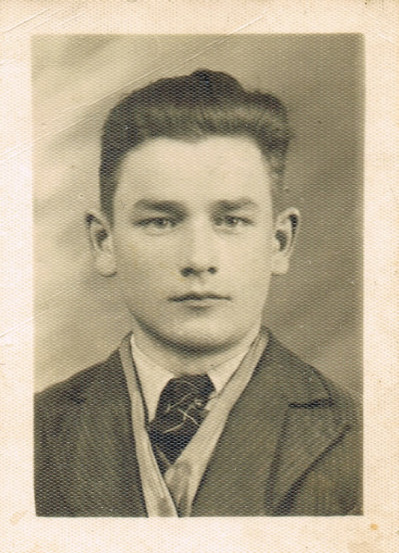
“Jan, Stanisław and Remigiusz were carrying out their assigned work at Treblinka station when yet another transport of Jews (likely from the Warsaw Ghetto) arrived on 20 August 1942. At around 10 a.m., they carefully made their way toward the wagons, carrying containers of water. They were unexpectedly spotted by one of the guards on duty, who immediately opened fire with his automatic weapon. Jan Maletka was killed on site. Stanisław and Remigiusz were able to fall to the ground and find cover in a nearby ditch. They managed to flee. As it later turned out, they had not been recognized by the staff of the camp,” said Dr. Marcin Panecki, a historian from the Pilecki Institute.
The Germans intended to transport Jan’s body into the camp and bury it there. Stanisław and Remigiusz turned to Treblinka’s railwaymen for help and, at their insistence, the Germans abandoned their plans and allowed the two men to take the body away. Stanisław and Remigiusz buried Jan in the cemetery in Prostyń. A grave was dug in the earth and a wooden cross was erected, but they did not stand the test of time. The exact final resting place of Jan Maletka remains unknown.
After these tragic events, Stanisław and Remigiusz returned to work on the railway for a brief period. Remigiusz Pawłowicz never forgot his friend, and told his daughter Barbara about him many years later.
The death of Jan Maletka at the railway station in the village of Treblinka – an analysis of source information
A relatively complete and unequivocal account is provided in the encyclopedic entry from Wacław Zajączkowski’s publication Martyrs of Charity (Washington, 1988, p. 236). Zajączkowski described the entire event on the basis of two sources: his interview with a witness to the events, Remigiusz Pawłowicz, conducted on 3 August 1983 in Małkinia (the full text of this interview is unfortunately not known), and a fragment from Franciszek Ząbecki’s book Wspomnienia dawne i nowe (Warsaw, 1977).

Death by gunshot
A document that unequivocally confirms the death of Jan Maletka – at 10:00 a.m. on 20 August 1942 in Treblinka as a result of a “gunshot wound” – is the death certificate from the parish register in Prostynia. The witnesses listed there are Stanisław Maletka, the victim’s brother, and Remigiusz Pawłowicz, the author of the account cited by Wacław Zajączkowski in his book.


Instances of compassion shown by railway workers to Jews being transported to the extermination camp
Franciszek Ząbecki, who at the time worked as the stationmaster in Treblinka, wrote in his book Wspomnienia dawne i nowe (Warsaw, 1977) about the compassion shown by Polish railway workers from the Treblinka station and their wives toward Jews confined in wagons and being transported to the extermination camp, including giving them water and the dangers associated with doing so. Ząbecki was not a random witness. As a railway employee and at the same time a soldier of the Home Army, he was tasked with collecting and passing on detailed information about railway transports to the extermination camp to his superiors. Two passages in his book concern the giving of water.
The entire station filled with the groans and cries of several thousand people. Human waste was thrown out through the small windows. Steam rose from the wagons despite the heat of the day. The people inside were partially undressed. Residents from nearby huts, especially women, brought water in buckets, giving it to the thirsty, lamenting and weeping over their fate. At first, the Germans did not react to the behavior of the local population; they were taken by surprise. Even Blechschmidt ordered the locomotive driver to move the train along the adjacent track, and the assistant to pass water from the tender. It was only with subsequent trains that SS escorts forbade giving water and approaching the train. Those more persistent in helping were first met with warning shots, and then driven away with blows from sticks and rifle butts. Blechschmidt’s order was revoked, and he himself reportedly faced repercussions. From that time on, giving water was prohibited under penalty of death. After a few days, Blechschmidt no longer came, and only his assistant, Teufel, appeared. This situation continued until two German railway workers were permanently assigned to Treblinka (F. Ząbecki, Wspomnienia dawne i nowe, p. 40).
This first passage describes in detail the arrival of the first train from the Warsaw Ghetto to Treblinka on 23 July 1942. Ząbecki depicts the spontaneous bringing of water by the local population and the initial lack of reaction from German guards, which made such actions possible. He states that the order to additionally provide water from the locomotive to the people confined in the wagons was issued by the German head of the nearby station in Sokołów Podlaski, Blechschmidt, who had come to Treblinka to supervise the shunting of wagons from the railway station via a siding to the camp. At a later stage, German guards forbade giving water and approaching the trains, and Blechschmidt’s order “was revoked, and he himself reportedly faced repercussions”. The paragraph concludes with the statement that “from that time on, giving water was prohibited under penalty of death”. The exact date of the ban is not specified.
The Polish population, both those living locally in Treblinka and those at stations along the train routes, showed great compassion toward the Jews. Despite the prohibition, railway workers gave water to the Jews. Even the wives of station employees – such as Pronicka, the stationmaster’s wife; Bąkowa, the wife of a track maintenance worker; Wierzbowska, the wife of a section foreman; and my wife Stanisława – ran to the wagons with buckets, weeping, to give at least a drop of water to small children. As already mentioned, this was very dangerous. A track maintenance worker was shot for giving water at the Treblinka station. I do not remember his name. It also happened that during these short stops at stations, railway workers opened the doors, enabling Jews to escape (F. Ząbecki, Wspomnienia dawne i nowe, p. 46).
The second passage refers to the assistance provided by Polish railway workers and their families. Ząbecki described their attitude as one of “great compassion toward the Jews”, their attempts to give water to people confined in wagons standing at the station, and emphasized that this was dangerous. As an example, he cites the case of a track maintenance worker who was shot “for giving water at the Treblinka station”. The author admits that he did not remember the name of the man who was shot.
Although Franciszek Ząbecki did not provide the name of the railway worker who was shot, it is difficult to assume that the stationmaster had anyone other than Jan Maletka in mind, as he described him quite precisely (a “track maintenance worker”) and did not mention any other similar cases. Moreover, as already noted, while working at the station, Ząbecki was also an intelligence operative of the Home Army and carefully observed and recorded what was happening at his place of work.
Testimony before a German court
The credibility of Franciszek Ząbecki’s account is further reinforced by the fact that he also testified under oath before a German court in Düsseldorf in 1965 during the trial of the extermination camp staff, which resulted in the conviction of German perpetrators. The records of this testimony are preserved in the case files.

“It was strictly forbidden to give people water. I remember that a railway worker was shot for bringing water to people” (Excerpt from Franciszek Ząbecki’s testimony based on a scanned document: Vernehmungsniederschriften aus der Hauptverhandlung (31.-40. Verhandlungstag, 22.12.1964–19.01.1965), notebook 3).
The shooting of a Polish railway worker was considered noteworthy by a German journalist and court reporter. He wrote about it in a report from the trial titled Fahrdienstleister des Teufels. Pole berichtet über die Arbeit am Bahnhof Treblinka [The Devil’s Transport Service. A Pole recounts his work at the Treblinka train station], published in the Rheinische Post newspaper on 20 January 1965.


Ząbecki stated that it was forbidden to give prisoners water. On one occasion, a railway worker was even shot for doing so; he said that the stretch from the last station before Treblinka, Siedlce, to the final destination station was “strewn with corpses”.
Film record – testimony by the daughter of a witness
Further details regarding the events in question can be found in a filmed testimony recorded by the Pilecki Institute in 2022. The events are recounted by Barbara Pyskło, the daughter of Remigiusz Pawłowicz, who knows them from her father.
Other studies
The story of Jan Maletka has also been described (on the basis of the same sources presented above) in the following works:
- Paweł Rytel-Andrianik, Edward Kopówka, Dam im imię na wieki. Polacy z okolic Treblinki ratujący Żydów, Warsaw, 2011
- Monika Samuel, Między życiem a śmiercią. Stacja Treblinka, Treblinka, 2021.
“Water Traders” – analysis of the issue and contexts in Robert Szuchta’s article
A valuable complement to the materials on the tragic death of Jan Maletka – one which provides a broader context for this specific case, and addresses other issues related to giving water to Jews confined in inhumane conditions in train wagons bound for Treblinka – is the article Kupcy wodni [Water Traders] by Robert Szuchta, published in the volume Sprawiedliwi i kolaboranci (ed. Alicja Bartuś, Oświęcim, 2022). The author primarily describes the titular “water traders”, i.e. Poles who exploited the tragedy of Jews locked in cattle cars to enrich themselves in a disgraceful manner by selling water in exchange for valuables or large sums of money. Although this phenomenon was more common than acts of selfless assistance, the latter, according to the author, also took place.
In summary, it cannot be conclusively established today that water was sold to Jews and that the desire for profit was the sole motivation behind this risky activity. The collected accounts, originating from victims as well as participating observers (the local Polish population and Polish railway workers) present a varied picture. It is not possible today to ascribe unequivocally negative or, conversely, altruistic motivations to those who sold water. There were individuals who, at the risk of their own lives and driven by compassion and empathy for the victims, sought to alleviate the suffering of people being transported to their deaths in inhumane conditions. There were also those who, guided by the myth of “Jewish gold” and by the belief that Jewish life was of no value, sought to profit and improve their difficult material situation caused by the conditions of occupation.
Szuchta, “Kupcy wodni”, p. 140.
For the case under discussion, Robert Szuchta’s observation is important: such selfless assistance was possible only during the first few weeks of the Treblinka extermination camp’s operation. As is known, the first transport from the Warsaw Ghetto arrived in Treblinka on 23 July 1942. Jan Maletka was shot on August 20 of the same year, that is, precisely within the period of the “first few weeks of the camp’s operation”.
Accounts by Polish railway workers indicate that the selfless giving of water to thirsty Jews was possible only in the initial period, which lasted no more than the first few weeks of the Treblinka extermination camp’s operation.
Szuchta, “Kupcy wodni”, p. 137.
The full article is available online at: http://www.oipc.pl/pliki/Szuchta.pdf.
Ceremonies commemorating Jan Maletka
(November 25, 2021)

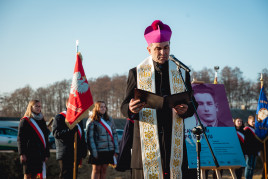
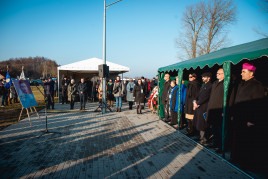
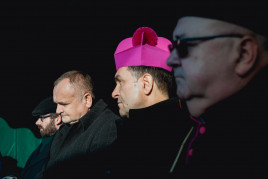
The ceremony began with Holy Mass at the St. Anne Sanctuary of the Holy Trinity in Prostyń, celebrated by Rev. Bishop Piotr Sawczuk, Rev. Dr. Paweł Rytel-Adrianik, Rev. Józef Poskrobko, Rev. Jan Marek Wróblewski, Rev. Piotr Legacki, and Rev. Krzysztof Maksimiuk.
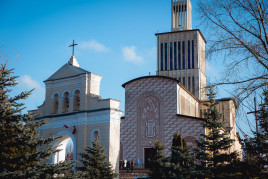
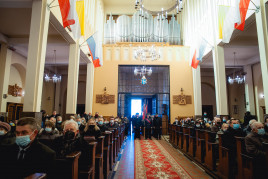
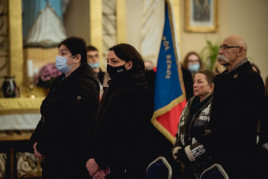
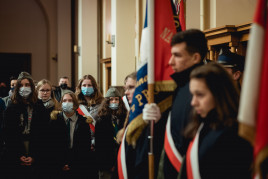
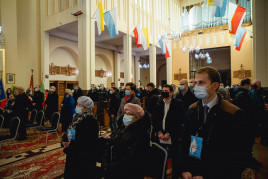
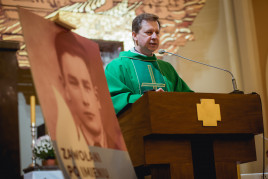
A stone with a plaque commemorating Jan Maletka was erected in the village of Treblinka, where there is also an installation commemorating Jews at the site of the former railway station. The plaque was unveiled jointly by Zofia Łopacka, Jan Maletka’s niece, and Prof. Magdalena Gawin, Deputy Minister of Culture and National Heritage and initiator of the project. The site was consecrated by Bishop Piotr Sawczuk. Rabbi Yehoshua Ellis said a prayer for the deceased on behalf of the Jewish community.
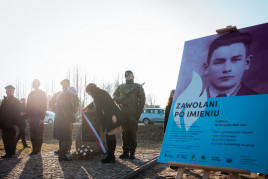
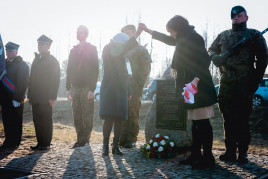
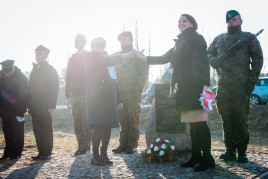
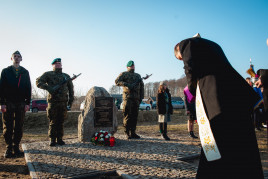
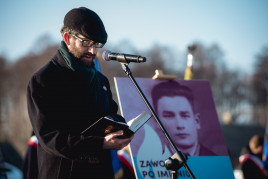
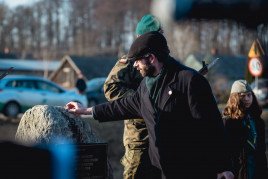
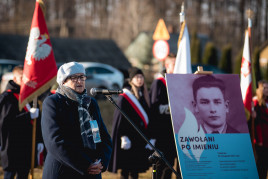
“Jan’s nature and joyfulness really reminded me of his father, my grandfather, who lived to be 86. Jan was the life of the party, he was very kind and open-hearted. He was always optimistic about life and people, even in spite of the war. So much so that it is difficult to believe his life was ended so suddenly. Asked why they were doing what they were, Jan apparently told his future mother-in-law: ‘It’s impossible to remain indifferent when you hear that awful screaming,’” said Zofia Łopacka, Jan Maletka’s niece.
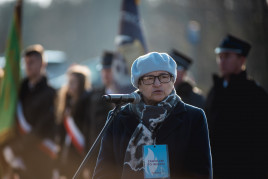
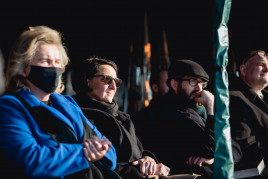
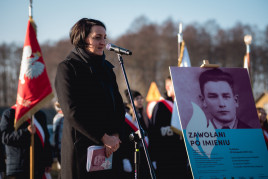
“This is such a special place, marked by the suffering of thousands of innocent people, that we must all work to ensure that some good comes from that young man’s misfortune and sacrifice. Good must always prevail,” said the Deputy Minister of Culture and National Heritage Magdalena Gawin, initiator of the “Called By Name” project.
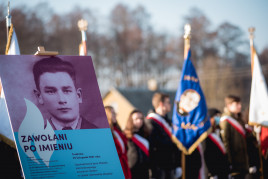
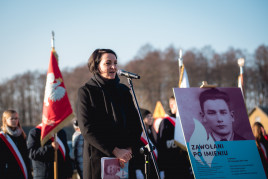
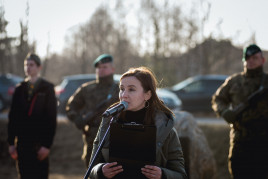
The director of the Pilecki Institute, Dr. Wojciech Kozłowski, addressed a letter to be read out at the ceremony by Dr. Anna Stróż-Pawłowska, head of the institute’s “Called By Name” Department: “It is difficult to remain indifferent to this tragedy. It is difficult not to ask what cruelty was required to establish a whole criminal system that rewarded acts of mercy with death – what courage and moral stalwartness was needed to resist evil and remain human in such inhuman times, even at the cost of one’s own life.”
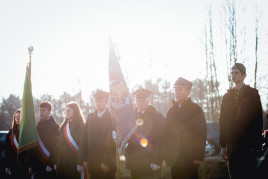
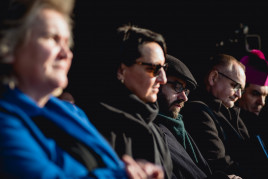
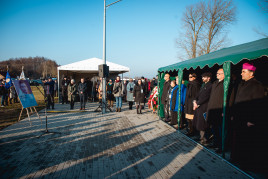
The ceremony, co-organized by the PKP Group, the Treblinka Museum, the district of Ostrów Mazowiecka (represented by the starost Zbigniew Chrupka) and the commune of Małkinia Górna (represented by the head of the commune Bożena Kordek), was also attended by representatives of the family of the victim, Anna Gutkowska – deputy director of the Pilecki Institute, Dr. Edward Kopówka –director of the Treblinka Museum, representatives of the PKP Group, representatives of the government and local authorities, and the local community.
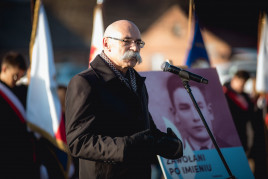

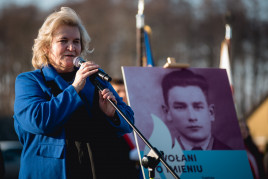
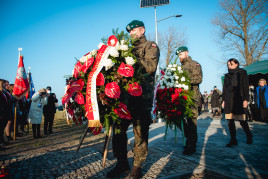
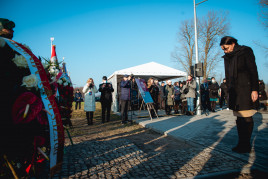
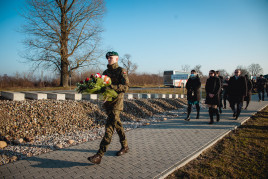
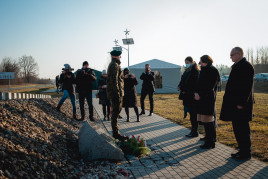
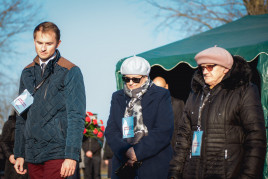
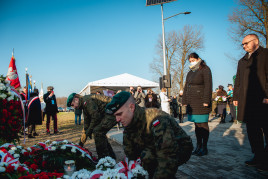
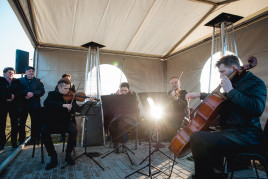
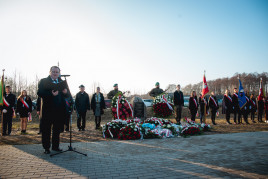
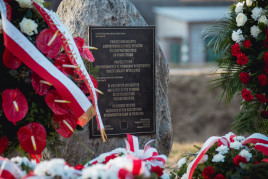
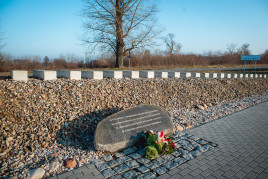
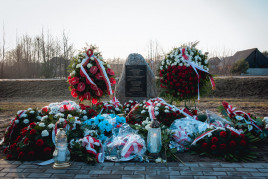
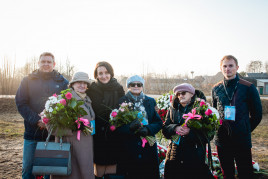
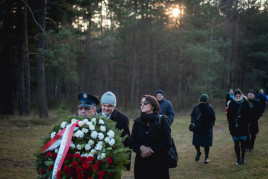
After the official proceedings of the commemoration, members of Jan Maletka’s family, Deputy Minister Prof. Magdalena Gawin, Deputy Director of the Pilecki Institute Anna Gutkowska, Rabbi Yehoshua Ellis, and representatives of local authorities laid flowers and lit candles at the site of the Treblinka I labor camp and the Treblinka II death camp.
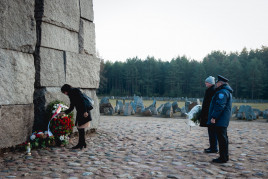
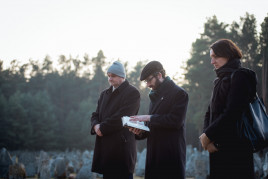
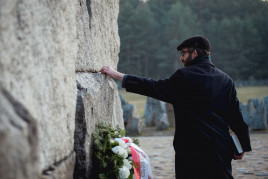
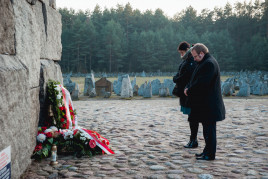
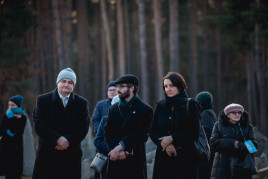
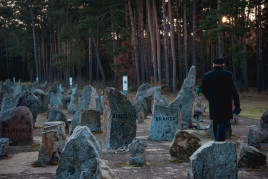
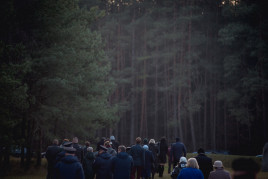

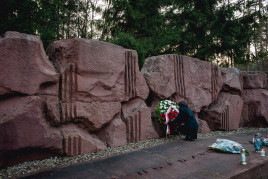
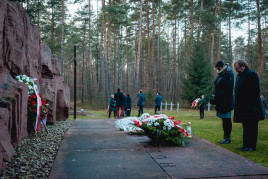
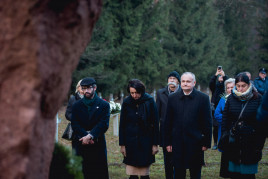
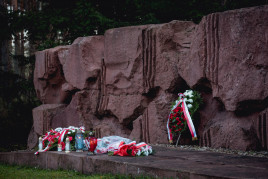
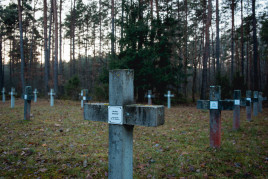
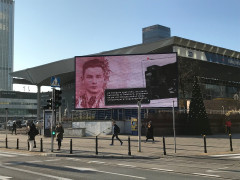
The event was given a special setting with the help of the PKP Group. The signal to start the ceremony was given at 12:30 p.m. by trains passing nearby the site. An animation presenting the story of Jan Maletka was displayed on advertising screens near the Central Station in Warsaw and on its platforms throughout the day.
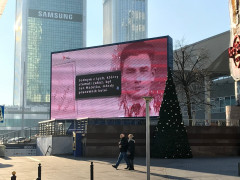
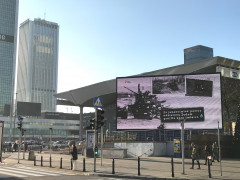
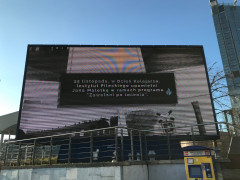
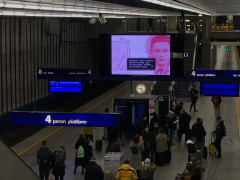
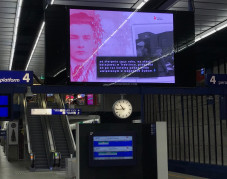
The commemoration was accompanied by educational workshops organized by the employees of the Pilecki Institute and the Pilecki Family Museum in Ostrów Mazowiecka in nearly 20 primary and secondary schools in the region.