The values and moral norms of the societies of occupied Europe – a debate on the book “An Iron Wind: Europe Under Hitler” - Instytut Pileckiego

debate
19.09.2019 (Thu) 17:45
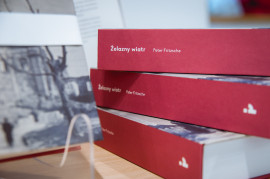
The values and moral norms of the societies of occupied Europe – a debate on the book “An Iron Wind: Europe Under Hitler”
Peter Fritzsche’s book presents the history of German occupied Europe from the perspective of various historical sources. Making use of chronicles, letters and a variety of other accounts, the author depicts the realities of everyday life in occupied countries. He shows the efforts undertaken by their residents in order to function despite the growing brutal repressions and total war as well as their struggle to survive the conflict while trying to understand and make sense of the new reality shaped by the Nazis.
In order to demonstrate the disparate experiences of various European nations, the author presents not only France – torn between collaboration and resistance – and Poland – subjected to severe repressions – but also neutral Switzerland. He focuses especially on the ways in which societies reacted to the Holocaust and other mass atrocities. The book also poses difficult questions about universal mechanisms determining the limits of human solidarity and empathy in the face of violence. By confronting us with the witnesses’ fear of captivity and death, it exposes the deceptive nature of applying norms relevant to the time of peace to our deliberations on war.
Peter Fritzsche – a historian, professor at the University of Illinois. Author of numerous books, among others, the acclaimed Life and Death in the Third Reich (2008).
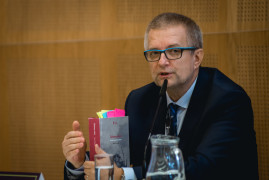
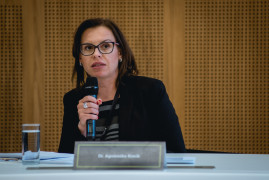
Our guests included:
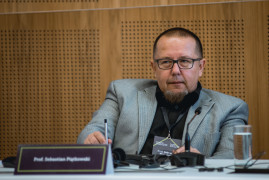
- Prof. Sebastian Piątkowski (Institute of National Remembrance Radom)
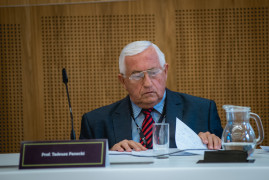
- Prof. Tadeusz Panecki (The Maria Grzegorzewska University)
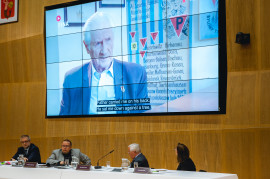
- Grzegorz Czerniak (Film Projects Team at the Pilecki Institute)
- Chair: Dr Agnieszka Konik (Center for Totalitarian Studies, Pilecki Institute)
See also
- Call for Papers | Exile Governments and Political Refugees in 20th-Century Europe: Sovereignty in the Face of Totalitarianisms (Deadline: November 15)
conference
Call for Papers | Exile Governments and Political Refugees in 20th-Century Europe: Sovereignty in the Face of Totalitarianisms (Deadline: November 15)
The year 2027 marks the 85th anniversary of the signing, on 13 January 1942, of the Declaration of St James’s Palace on the Punishment of War Crimes. To commemorate this landmark event, we are organising an international academic conference addressing the history and significance of governments in exile and political refugees in 20th-century Europe.
- Conference “Shared Experiences – Different Paths? The Turning Point of 1956 and Its Significance for the Countries and Societies of East Central Europe”
conference
Conference “Shared Experiences – Different Paths? The Turning Point of 1956 and Its Significance for the Countries and Societies of East Central Europe”
The Pilecki Institute and the Tadeusz Manteuffel Institute of History of the Polish Academy of Sciences invite you to participate in an international academic conference, Shared Experiences – Different Paths? The Turning Point of 1956 and Its Significance for the Countries and Societies of East Central Europe, which will be held on 19–21 October 2026 in Warsaw. The event is part of a series of conferences devoted to the history of transformations in East Central Europe after 1945.
- New Jork | The Augustów Roundup – the largest Soviet crime committed against Polish citizens after World War II. Workshops and Presentations
Event
New Jork | The Augustów Roundup – the largest Soviet crime committed against Polish citizens after World War II. Workshops and Presentations
Learn the history of the Augustów Roundup, a Soviet operation carried out in July 1945 that resulted in the arrest and disappearance of hundreds of people.