Opening of the exhibition "Polish Paratroopers in Operation Market Garden" in Oosterbeek, the Netherlands - Instytut Pileckiego

05.07.2024 (Fri)
Opening of the exhibition "Polish Paratroopers in Operation Market Garden" in Oosterbeek, the Netherlands
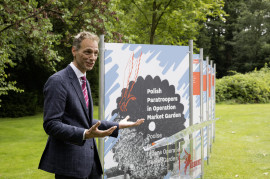
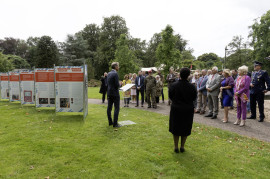
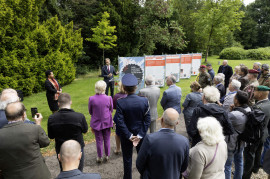
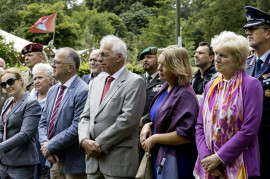
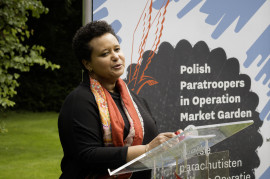
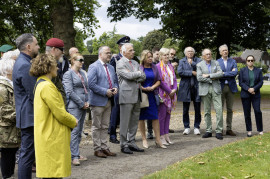
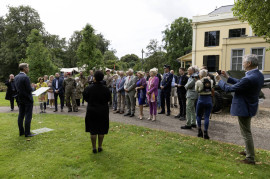
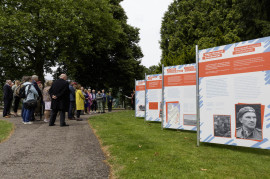
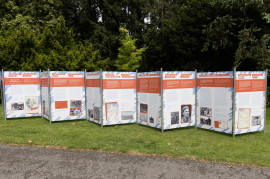
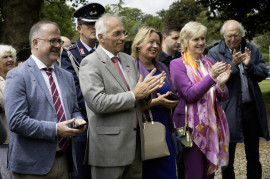
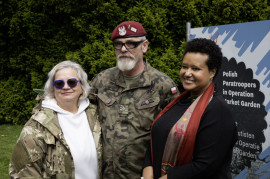
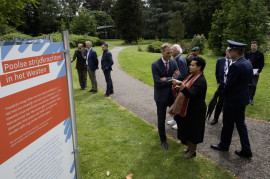
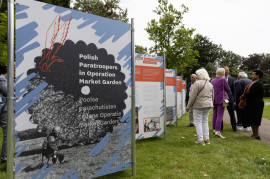
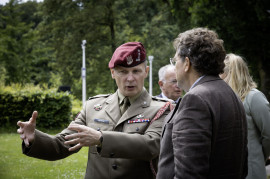
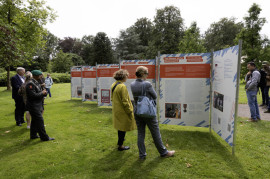
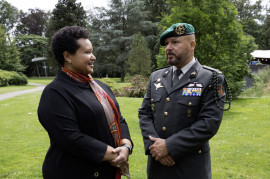
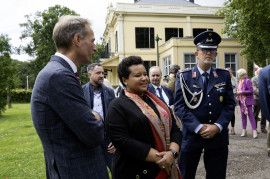
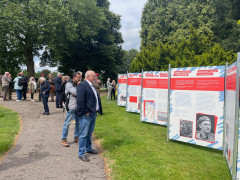
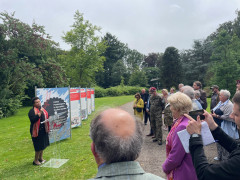
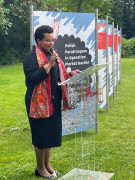
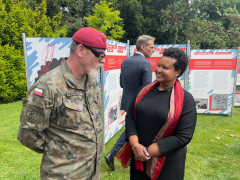
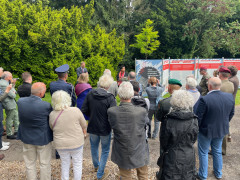
An outdoor exhibition about Polish paratroopers in Operation Market Garden, the 80th anniversary of which falls in September, opened today at the Airborne Museum at Hartenstein in Oosterbeek, the Netherlands.
July 6, 2024
The exhibition was developed jointly by the Pilecki Institute, the Embassy of the Republic of Poland in the Netherlands, and the Airborne Museum. The Driel-Polen Foundation, which has been cultivating the memory of the 1st Independent Parachute Brigade and its fight in the Battle of Arnhem, also contributed significantly to the project.
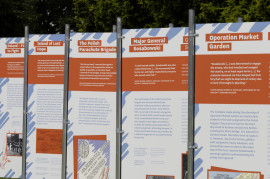
The exhibition, presented in English and Dutch language versions, gives a lucid overview of the key events in the history of the 1st Independent Parachute Brigade, and at the same time explains the tragic fate of Poland in the Second World War, which led among other things to Polish paratroopers finding themselves in the Netherlands in 1944.
The Airborne Museum, where the exhibition will be on view until 27 October 2024, is located in Oosterbeek near Arnhem. The museum has its seat at the former Hartenstein Hotel, which served as the headquarters of the British 1st Airborne Division during the Battle of Arnhem. Soldiers from the Polish brigade also fought in the vicinity.
The history of the 1st Independent Parachute Brigade aptly illustrates the Poles’ dramatic clash with totalitarian regimes during the Second World War. The brigade’s soldiers, including the commander, Brigadier General Stanisław Sosabowski, were either former prisoners of German POW camps and Soviet gulags or wanted fugitives from the occupied country. Many of them were in Anders’ Army before volunteering for risky service with the elite airborne unit. None of them had a chance to go back to Poland and take part in liberating the country. Some never returned to their homeland, and as emigrants suffered numerous injustices from their former allies after the war. Meanwhile, those who did return to Poland were harassed and persecuted by the communist authorities.
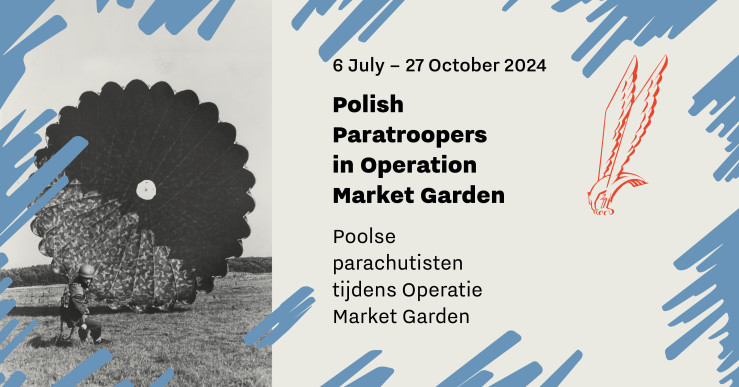
Graphic design: Damian Makowski
Special thanks:
Piotr Samerek and Natalia Zweekhorst from the Embassy of the Republic of Poland in The Hague
Ronnie Weijers – Director of the Airborne Museum at Hartenstein
Arno Baltussen – Chairman of the Driel-Polen Foundation
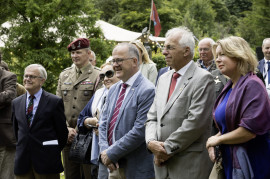
Photos: Arjan Vrieze Photography
See also
- Previously unpublished German archival materials from France’s ECPAD at the Pilecki Institute and the Warsaw Rising Museum
News
Previously unpublished German archival materials from France’s ECPAD at the Pilecki Institute and the Warsaw Rising Museum
The Witold Pilecki Institute of Solidarity and Valor and the Warsaw Rising Museum have signed a strategic trilateral cooperation agreement with ECPAD (Établissement de Communication et de Production Audiovisuelle de la Défense / Defense Communication and Audiovisual Production Center), the French military audiovisual archive based in Ivry-sur-Seine, France. The agreement gives the Polish institutions access to unique Second World War photographs previously unseen in Poland, opens access to the vast holdings of the French archive, and launches a partnership of major significance for research into Polish history.
- „Soviet Central Asia as a Totalitarian Testing Ground” - international academic conference
News
„Soviet Central Asia as a Totalitarian Testing Ground” - international academic conference
Three days, dozens of presentations, and researchers from Poland and abroad summed up the international academic conference held at the Pilecki Institute in Warsaw on 2–4 September.
- The hitherto unknown memoirs of a German official from occupied Poland have been donated to the Pilecki Institute
News
The hitherto unknown memoirs of a German official from occupied Poland have been donated to the Pilecki Institute
A unique document has been added to the Pilecki Institute’s archives: the previously unpublished and unknown memoirs of a German official who worked in the civil administration of the General Government during the Second World War.
- Evil Woven into Everyday Life | Dr Joanna Nikel on the Memoirs of a German Official from His Stay in the General Government
News
Evil Woven into Everyday Life | Dr Joanna Nikel on the Memoirs of a German Official from His Stay in the General Government
"It is rare for a document to find its way into archival collections in which the voice of an official of the occupation apparatus himself – written down without any intention of accusation, and even stressing his own sense of normality – becomes one of the most eloquent testimonies to the criminal nature of the system he served", writes Dr Joanna Nikel in her initial commentary on the materials received by the Pilecki Institute.
- 14 books nominated for this year’s Witold Pilecki International Book Award
News
14 books nominated for this year’s Witold Pilecki International Book Award
On Saturday, 5 September, at the Autumn Book Fair in Warsaw, the Pilecki Institute announced the titles and authors of 14 books nominated for this year’s Witold Pilecki International Book Award.
- New Jork | Exhibition: Between Life and Death. Stories of Rescue during the Holocaust
News
New Jork | Exhibition: Between Life and Death. Stories of Rescue during the Holocaust
Through October 29, the Pilecki Institute in New York is hosting an exhibition about the people who risked their own lives to save Jews during the Holocaust—and those who survived thanks to their courage.
- „Soviet Central Asia as a Totalitarian Testing Ground” - international academic conference
News
„Soviet Central Asia as a Totalitarian Testing Ground” - international academic conference
The international academic conference organized by the Pilecki Institute is the first initiative in Poland to bring together interdisciplinary research on Soviet Central Asia, a region with an exceptionally complex history of totalitarianism, mass repression, and forced deportations, that also include the experiences of Poles.
- Karol Madaj appointed Director of the Witold Pilecki Institute of Solidarity and Valor
News
Karol Madaj appointed Director of the Witold Pilecki Institute of Solidarity and Valor
Marta Cienkowska, the Minister of Culture and National Heritage, has appointed Karol Madaj Director of the Witold Pilecki Institute of Solidarity and Valor in Warsaw. His five-year term will begin on 30 August 2026. From 1 September 2025, Karol Madaj served as the acting director of the Pilecki Institute.
- Hacker attack on the websites of the Pilecki Institute in Warsaw, Berlin, and Augustów
News
Hacker attack on the websites of the Pilecki Institute in Warsaw, Berlin, and Augustów
On the night of August 13–14 our websites suffered another serious hacking attack. Content bearing the hallmarks of Russian propaganda and disinformation — targeting Polish history and reinforcing anti-Ukrainian narratives — was deliberately placed on the Institute's pages devoted to Augustów, Berlin, and Warsaw.
- Academic conference “Oppositional Engagement of Women in Authoritarian and Totalitarian Systems of the 20th Century: Poland in a Comparative European Perspective (1919–1989)”
News
Academic conference “Oppositional Engagement of Women in Authoritarian and Totalitarian Systems of the 20th Century: Poland in a Comparative European Perspective (1919–1989)”
The second academic conference in a series “Oppositional Engagement of Women in Authoritarian and Totalitarian Systems of the 20th Century: Poland in a Comparative European Perspective (1919–1989)” brought together representatives of various fields of the humanities and social sciences from numerous research centers in Poland and abroad.
- Accountability for War Crimes. New book from Pilecki's expert
News
Accountability for War Crimes. New book from Pilecki's expert
It is an expanded English-language edition of the monograph "Problem odpowiedzialności karnej za zbrodnie wojenne w pracach rządu polskiego na emigracji (1939–1945)", which in 2023 was awarded a grant under the Ministry of Science and Higher Education’s “Excellent Science II” program for the translation and open-access publication of the book abroad.
- 12 July | Day of Remembrance for the Victims of the Augustów Roundup
News
12 July | Day of Remembrance for the Victims of the Augustów Roundup
12 July is celebrated as the National Day of Remembrance for the Victims of the Augustów Roundup. The roundup began 81 years ago on this day – on 12 July 1945, two months after the end of the Second World War.