Declassified UN files | interview - Instytut Pileckiego

03.02.2020 (Mon)
Declassified UN files | interview
The world knew about the Shoah thanks to the Polish Underground State – the Polish Government-in-Exile informed the Allies about the Holocaust. An interview with Eryk Habowski, an expert in international law at the Pilecki Institute.
Why did Great Britain and the United States launch an initiative to establish the United Nations War Crimes Commission (UNWCC)? What were to be its tasks?
The unprecedented scale of crimes perpetrated by 20th-century totalitarianisms, particularly the German “death industry” (about which Churchill said in a 1941 radio interview that Europe hasn’t seen such atrocities since the Mongol invasions), and the pressure exerted by émigré governments, especially the Polish Government in London, led to the Allies’ decision to establish the UNWCC. Upon prior agreement, a statement on the subject was made on 7 October 1942 by the US president, F.D. Roosevelt, and Lord Chancellor J. Simon. The first official meeting of the representatives of Australia, Belgium, China, Czechoslovakia, France, Greece, the Netherlands, India, Yugoslavia, Canada, Luxembourg, New Zealand, Norway, Poland, South Africa, Great Britain and the United States was held on 20 October 1943 in London. The objective was clear: the Commission was to assist the Allies in gathering evidence against war criminals from both Europe and East Asia in order to make it possible to bring the perpetrators to a reckoning after the war. The UNWCC operated from January 1944 to March 1948. The Commission asserted its importance among others by playing a part in initiating works aimed at establishing the International Military Tribunal at Nuremberg.
What can be found among the UNWCC documents?
These are the recently declassified UN procedural files: indictments against war criminals or persons suspected of crimes against the law of nations. There are witness accounts, protocols, reports, as well as a host of subsidiary materials. These archival documents pertain to over 8,000 cases and about 36,000 people accused of various war crimes committed during the Second World War by the Axis powers. Charges brought by Poland concern over 1,500 cases. The entire collection numbers almost half a million of pages.
What was the scale of Polish activity in the Commission?
When in November 1944 – 10 months after it commenced its operations – the UNWCC announced the first list of war criminals, it contained over 700 names. The vast majority – about 400 – came from charges filed by the Polish Government in London. Polish documents were drafted on the basis of information that was diligently gathered since the beginning of the war and meticulously analyzed; the Polish Government-in-Exile had begun the systematic operation of gathering evidence of German crimes in the occupied country already in the spring of 1940 – about half a year after SMS Schleswig-Holstein fired the first shots at Westerplatte. At the same time, the Poles alerted the world to the genocidal nature of the Nazi totalitarianism, striving for a universal condemnation of the occupant’s crimes. One of the first acts of this kind was the joint Polish-British-French declaration of 18 April 1940. In October of the same year, the Polish Government issued a statement on German crimes together with the Czech Government. But this was just a beginning: there followed more appeals, memoranda, and notes filed by the Polish authorities to the Allies, including directly to the US president, Franklin D. Roosevelt. In September 1941 Poland acceded to the Atlantic Charter, and in January 1942 the Poles were the driving force behind the signing of the Declaration of St. James’ Palace, which brought together the delegates from Poland, Czechoslovakia, Yugoslavia, Norway, the Netherlands, Greece, Belgium, Luxembourg and France, with the representatives of among others the United Kingdom, the United States, the USSR, China and India as observers. On 10 December 1942, the Polish émigré government sent a 9-page note on the Holocaust to all the Allies; the document was signed by the Polish Minister of Foreign Affairs, Edward Raczyński. It was the first address of this kind ever to be made by a European government. A week later, the Allied powers issued a declaration demanding that the Germans bring an end to the extermination of Jews, while Count Raczyński alerted the press and gave an evening speech at the BBC radio: “should people keep quiet, the stones will cry out”.
Did the Poles present evidence of the functioning of concentration and death camps still during the war?
It should be emphasized that detailed charges concerning for instance the death camp of Treblinka were filed in April 1944, a few months before the Soviet army entered the camp – and, for that matter, before the Allied invasion of Normandy on 6 June or the outbreak of the Warsaw Uprising in August 1944.
The charge concerning Treblinka mentions, among others, the sorting of clothes and shoes of people going to their deaths and the burning of corpses of Jewish victims, which first had to be dragged out of the death chambers. People forced to perform this kind of work were next made to dig graves for themselves – and were shot in them.
The number of charges brought by Poland and concerning crimes against the Jews was over 370 – it was virtually every fourth Polish indictment.
Apart from work in the UNWCC and making appeals to the world’s conscience, there is also the case of the so-called “Ładoś Group”, which was active in Switzerland. Was it an isolated operation, or can we rather speak of a broader action?
Of key importance here is the continued and consistent activity of the Polish Government in London, the work of hundreds of thousands of people in the underground in occupied Poland, the tasks fulfilled by Polish diplomats – including Envoy Aleksander Ładoś, his “Bernese Group” and their operation of issuing false passports to rescue thousands of European Jews – but also appeals voiced at the time for the bombarding of the railway lines leading into Auschwitz in order to prevent transports of people earmarked for extermination. To this picture we should add the life of Cavalry Captain Witold Pilecki, who volunteered to be sent to Auschwitz, and of Henryk Sławik, who saved thousands of people in Hungary, as well as the establishment of the Council to Aid Jews “Żegota”. Other stories of this kind are still being discovered in the course of archival research.
These are not isolated incidents but consistent, systemic activities of the Polish Government-in-Exile and its structures aimed at rescuing as many people as it was possible in the dark midst of the Age of Genocide.
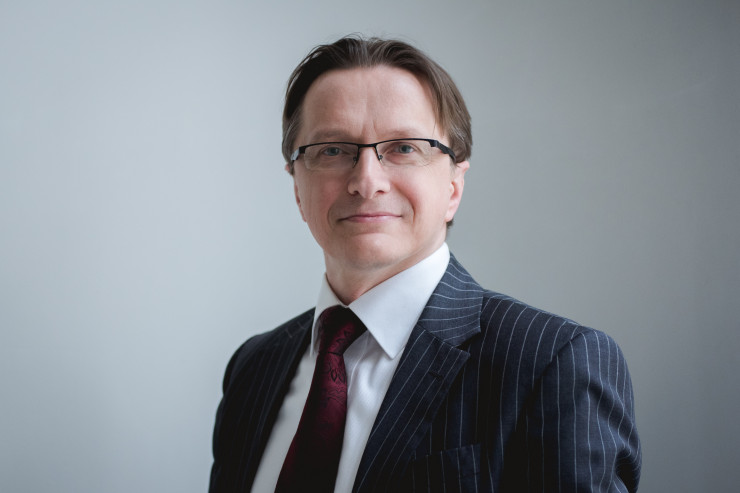
Eryk Habowski, an expert in International law at the Pilecki Institute and author of a forthcoming monograph on the UNWCC and the Polish diplomacy.
See also
- Previously unpublished German archival materials from France’s ECPAD at the Pilecki Institute and the Warsaw Rising Museum
News
Previously unpublished German archival materials from France’s ECPAD at the Pilecki Institute and the Warsaw Rising Museum
The Witold Pilecki Institute of Solidarity and Valor and the Warsaw Rising Museum have signed a strategic trilateral cooperation agreement with ECPAD (Établissement de Communication et de Production Audiovisuelle de la Défense / Defense Communication and Audiovisual Production Center), the French military audiovisual archive based in Ivry-sur-Seine, France. The agreement gives the Polish institutions access to unique Second World War photographs previously unseen in Poland, opens access to the vast holdings of the French archive, and launches a partnership of major significance for research into Polish history.
- „Soviet Central Asia as a Totalitarian Testing Ground” - international academic conference
News
„Soviet Central Asia as a Totalitarian Testing Ground” - international academic conference
Three days, dozens of presentations, and researchers from Poland and abroad summed up the international academic conference held at the Pilecki Institute in Warsaw on 2–4 September.
- The hitherto unknown memoirs of a German official from occupied Poland have been donated to the Pilecki Institute
News
The hitherto unknown memoirs of a German official from occupied Poland have been donated to the Pilecki Institute
A unique document has been added to the Pilecki Institute’s archives: the previously unpublished and unknown memoirs of a German official who worked in the civil administration of the General Government during the Second World War.
- Evil Woven into Everyday Life | Dr Joanna Nikel on the Memoirs of a German Official from His Stay in the General Government
News
Evil Woven into Everyday Life | Dr Joanna Nikel on the Memoirs of a German Official from His Stay in the General Government
"It is rare for a document to find its way into archival collections in which the voice of an official of the occupation apparatus himself – written down without any intention of accusation, and even stressing his own sense of normality – becomes one of the most eloquent testimonies to the criminal nature of the system he served", writes Dr Joanna Nikel in her initial commentary on the materials received by the Pilecki Institute.
- 14 books nominated for this year’s Witold Pilecki International Book Award
News
14 books nominated for this year’s Witold Pilecki International Book Award
On Saturday, 5 September, at the Autumn Book Fair in Warsaw, the Pilecki Institute announced the titles and authors of 14 books nominated for this year’s Witold Pilecki International Book Award.
- New Jork | Exhibition: Between Life and Death. Stories of Rescue during the Holocaust
News
New Jork | Exhibition: Between Life and Death. Stories of Rescue during the Holocaust
Through October 29, the Pilecki Institute in New York is hosting an exhibition about the people who risked their own lives to save Jews during the Holocaust—and those who survived thanks to their courage.
- „Soviet Central Asia as a Totalitarian Testing Ground” - international academic conference
News
„Soviet Central Asia as a Totalitarian Testing Ground” - international academic conference
The international academic conference organized by the Pilecki Institute is the first initiative in Poland to bring together interdisciplinary research on Soviet Central Asia, a region with an exceptionally complex history of totalitarianism, mass repression, and forced deportations, that also include the experiences of Poles.
- Karol Madaj appointed Director of the Witold Pilecki Institute of Solidarity and Valor
News
Karol Madaj appointed Director of the Witold Pilecki Institute of Solidarity and Valor
Marta Cienkowska, the Minister of Culture and National Heritage, has appointed Karol Madaj Director of the Witold Pilecki Institute of Solidarity and Valor in Warsaw. His five-year term will begin on 30 August 2026. From 1 September 2025, Karol Madaj served as the acting director of the Pilecki Institute.
- Hacker attack on the websites of the Pilecki Institute in Warsaw, Berlin, and Augustów
News
Hacker attack on the websites of the Pilecki Institute in Warsaw, Berlin, and Augustów
On the night of August 13–14 our websites suffered another serious hacking attack. Content bearing the hallmarks of Russian propaganda and disinformation — targeting Polish history and reinforcing anti-Ukrainian narratives — was deliberately placed on the Institute's pages devoted to Augustów, Berlin, and Warsaw.
- Academic conference “Oppositional Engagement of Women in Authoritarian and Totalitarian Systems of the 20th Century: Poland in a Comparative European Perspective (1919–1989)”
News
Academic conference “Oppositional Engagement of Women in Authoritarian and Totalitarian Systems of the 20th Century: Poland in a Comparative European Perspective (1919–1989)”
The second academic conference in a series “Oppositional Engagement of Women in Authoritarian and Totalitarian Systems of the 20th Century: Poland in a Comparative European Perspective (1919–1989)” brought together representatives of various fields of the humanities and social sciences from numerous research centers in Poland and abroad.
- Accountability for War Crimes. New book from Pilecki's expert
News
Accountability for War Crimes. New book from Pilecki's expert
It is an expanded English-language edition of the monograph "Problem odpowiedzialności karnej za zbrodnie wojenne w pracach rządu polskiego na emigracji (1939–1945)", which in 2023 was awarded a grant under the Ministry of Science and Higher Education’s “Excellent Science II” program for the translation and open-access publication of the book abroad.
- 12 July | Day of Remembrance for the Victims of the Augustów Roundup
News
12 July | Day of Remembrance for the Victims of the Augustów Roundup
12 July is celebrated as the National Day of Remembrance for the Victims of the Augustów Roundup. The roundup began 81 years ago on this day – on 12 July 1945, two months after the end of the Second World War.