Tribute to Piotr Leszczyński and Antoni Prusiński - Instytut Pileckiego

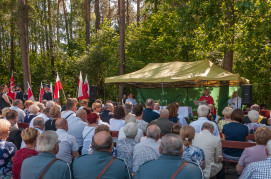
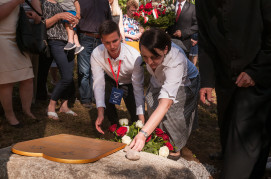
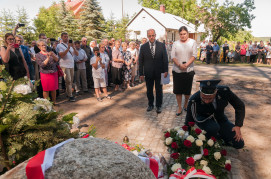
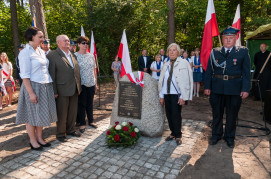
A memorial stone and plaque commemorating the murder of Antoni Prusiński and Piotr Leszczyński for helping Jews was unveiled on Sunday, 9 June 2019, in the township of Poręba-Kocęby near Ostrów Mazowiecka.
A memorial stone and plaque commemorating the murder of Antoni Prusiński and Piotr Leszczyński for helping Jews was unveiled on Sunday, 9 June 2019, in the township of Poręba-Kocęby near Ostrów Mazowiecka.
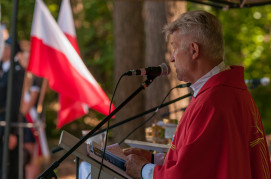
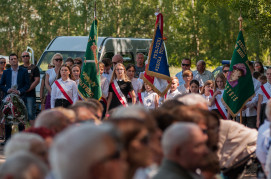
The stone and plaque were unveiled at the edge of the town near the forest, where those commemorated were murdered. The unveiling was preceded by an outdoor mass with the families of those honored and representatives of local organizations, associations and members of the community in attendance. Speakers during the unveiling ceremony included Prof. Magdalena Gawin, Deputy Minister of Culture and National Heritage; Prof. Wiesław Przybylski, head of Brańszczyk municipality; Jerzy Żukowski, head of Wyszków County; Wojciech Kozłowski, Director of the Pilecki Institute, as well as Apolonia and Andrzej Leszczyński, representing the families of the murdered.
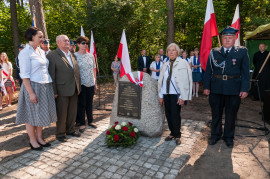
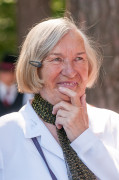
“You had to wait 75 years after the war for them to be saluted and rendered justice,” said Minister Magdalena Gawin during the ceremony. “On behalf of the Polish State, I wish to express gratitude that during the terrible occupation there were people brave enough to put the good of strangers ahead of their own safety and the safety of their families. Antoni Prusiński and Piotr Leszczyński are martyrs of your town.”
Antoni Prusiński and Piotr Leszczyński were respected farmers. Their houses were located at the edge of the village, close to the forest, in which a Jew (whose name remains unknown) was hiding with the help of the local community. On 15 May 1943 after 4 a.m., German forces surrounded the village. The gendarmerie and Gestapo launched a manhunt for Jews. Antoni Prusiński hid in one of the farm buildings. Trying to get him to come out, the Germans beat his wife and set his house on fire. Subjected to this kind of pressure, Antoni Prusiński came out. During the roundup, the Germans also captured Piotr Leszczyński from the neighboring farm. They beat the captives with sticks. When the Jew in hiding was also seized, all three men were beaten unconscious and then finished off with a pistol and buried in one grave.
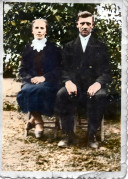
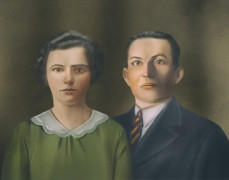
“This commemoration is very important to our family,” said Andrzej Leszczyński, Piotr Leszczyński’s grandson. “My great grandmother kept this tragedy a secret and didn’t utter a word for many years. After many years she decided to tell us the story. She said she was afraid of the memories. It was a family tragedy,” he added.
See also
- New Jork | The Augustów Roundup – the largest Soviet crime committed against Polish citizens after World War II. Workshops and Presentations
Event
New Jork | The Augustów Roundup – the largest Soviet crime committed against Polish citizens after World War II. Workshops and Presentations
Learn the history of the Augustów Roundup, a Soviet operation carried out in July 1945 that resulted in the arrest and disappearance of hundreds of people.
- 80th Anniversary of the Nuremberg Judgment | Master lecture by Prof. William Schabas and an international discussion panel
lecture
80th Anniversary of the Nuremberg Judgment | Master lecture by Prof. William Schabas and an international discussion panel
– “1 October 2026 marks the 80th anniversary of the Judgment of the International Military Tribunal (IMT) at Nuremberg, which was a watershed moment for the development of international criminal law.” – emphasized Dr. Dominika Uczkiewicz from the Pilecki Institute.
- Redressing Wartime Violations: How can individuals claim their right to reparation?
debate
Redressing Wartime Violations: How can individuals claim their right to reparation?
War inflicts profound damage on nations, non-state actors, and individuals alike—affecting both combatants and civilians. Since the end of World War II, Poland has consistently advocated for individual compensation regarding wartime violations.