Nominations for the third edition of the Witold Pilecki International Book Award - Instytut Pileckiego

books
03.10.2023 (Tue) 12:00
Nominations for the third edition of the Witold Pilecki International Book Award
We know the authors nominated for the Witold Pilecki International Book Award! The Award Committee has selected 15 publications to compete in 3 different categories.
In this year’s third edition of the competition, the prize will be awarded to authors of the best academic and journalistic Polish- or English-language books published in 2022 and devoted to the Polish experience of two totalitarianisms. A special prize will be awarded for a book concerning Russia’s ongoing aggression against Ukraine since 2014 or the protests in Belarus since 2020 and the repression associated with them.
The international Award Committee is comprised of prominent scholars: Dr. Łukasz Adamski, Prof. Richard Butterwick-Pawlikowski, Prof. Marek Cichocki, Dr. Piotr Cywiński (Chairman of the Award Committee), Jack Fairweather, Prof. Magdalena Gawin, Prof. Patrycja Grzebyk, Prof. Marek Kornat, Dr. Wojciech Stanisławski and Prof. Claudia Weber, as well as war correspondent Jack Fairweather and Krzysztof Kosior – representative of the patron’s family, great-grandson of Witold Pilecki.
From among over fifty books submitted by authors and publishers, the Award Committee has selected 5 nominees in each category.
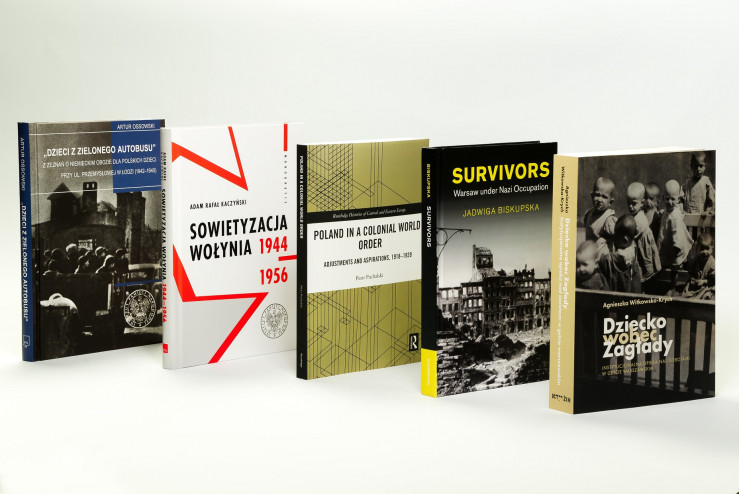
Category I. Academic history book – the best monograph or synthesis concerning the Polish experience of the confrontation with two 20th-century totalitarian regimes. The prize will be awarded to well-researched books comprising an original interpretation and written in an appealing way.
Nominees:
- Jadwiga Biskupska, Survivors: Warsaw under Nazi Occupation, Cambridge University Press
- Adam Rafał Kaczyński, Sowietyzacja Wołynia 1944–1956, Instytut Pamięci Narodowej
- Artur Ossowski, Dzieci z zielonego autobusu. Z zeznań o niemieckim obozie dla polskich dzieci przy ul. Przemysłowej w Łodzi, Instytut Pamięci Narodowej
- Piotr Puchalski, Poland in a Colonial World Order. Adjustments and Aspirations 1918-1939, Routledge
- Agnieszka Witkowska-Krych, Dziecko wobec Zagłady. Instytucjonalna opieka nad sierotami w getcie warszawskim, Żydowski Instytut Historyczny
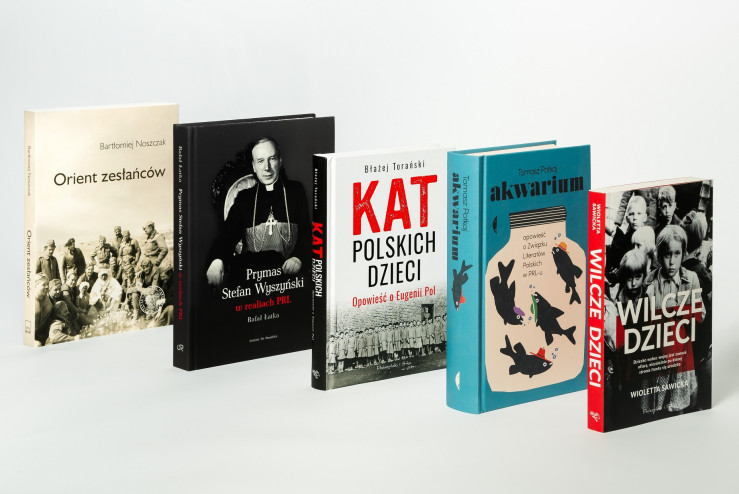
Category II. Historical reportage – a captivating depiction of the Polish experience of two 20th-century totalitarianisms. In addition to classic historical reportages, entries in this category may include biographies, collections of accounts, memoirs and correspondence of witnesses to history. The prize will be awarded for respectful approach to historical sources, well-organized composition and unbiased narrative.
Nominees:
- Rafał Łatka, Prymas Stefan Wyszyński w realiach PRL, Instytut De Republica
- Bartłomiej Noszczak, Orient zesłańców. Bliski Wschód w oczach Polaków ewakuowanych ze Związku Sowieckiego (1942–1945), Instytut Pamięci Narodowej
- Tomasz Potkaj, Akwarium. Opowieść o Związku Literatów Polskich w PRL-u, Wydawnictwo Czarne
- Wioletta Sawicka, Wilcze Dzieci. Dziecko wobec wojny jest zawsze ofiarą, niezależnie po której stronie frontu się urodziło, Prószyński Media
- Błażej Torański, Kat polskich dzieci. Opowieść o Eugenii Pol, Prószyński Media
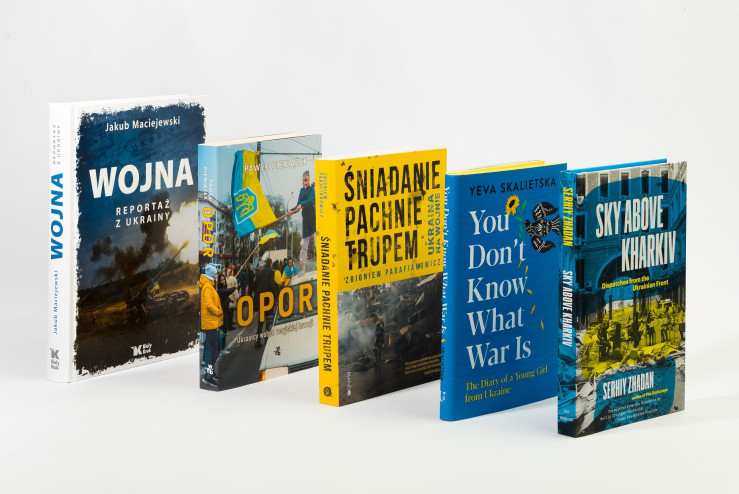
Category III. The special prize in the current edition will be awarded to a book detailing Russia’s ongoing aggression against Ukraine since 2014 or the protests in Belarus since 2020 and the repression associated with them. When evaluating books in this category, a broad scope of reflection, determination in the pursuit of truth, and investigative intuition will be particularly appreciated.
Nominees:
- Jakub Maciejewski, Wojna. Reportaż z Ukrainy, Biały Kruk
- Zbigniew Parafianowicz, Śniadanie pachnie trupem. Ukraina na wojnie, Mando
- Paweł Pieniążek, Opór. Ukraińcy wobec rosyjskiej inwazji, WAB
- Yeva Skalietska, You don't know what war is. The Diary of a Young Girl from Ukraine, Union Square
- Serhiy Zhadan, Sky Above Kharkiv: Dispatches from the Ukrainian Front, Yale University Press
The partner of the award is the Auschwitz-Birkenau State Museum in Oświęcim. The authors of the best books in each category will receive a cash prize of PLN 40,000 and a commemorative statuette. In addition to that, the Award Committee may also select up to two honorable mentions in each category – authors of commended books will receive a cash prize of PLN 15,000. The prizes and honorable mentions will be awarded at a gala ceremony, which will take place in Warsaw in November 2023.
See also
- Conference “Shared Experiences – Different Paths? The Turning Point of 1956 and Its Significance for the Countries and Societies of East Central Europe”
Event
Conference “Shared Experiences – Different Paths? The Turning Point of 1956 and Its Significance for the Countries and Societies of East Central Europe”
The Pilecki Institute and the Tadeusz Manteuffel Institute of History of the Polish Academy of Sciences invite you to participate in an international academic conference, Shared Experiences – Different Paths? The Turning Point of 1956 and Its Significance for the Countries and Societies of East Central Europe, which will be held on 19–21 October 2026 in Warsaw. The event is part of a series of conferences devoted to the history of transformations in East Central Europe after 1945.
- New Jork | The Augustów Roundup – the largest Soviet crime committed against Polish citizens after World War II. Workshops and Presentations
Event
New Jork | The Augustów Roundup – the largest Soviet crime committed against Polish citizens after World War II. Workshops and Presentations
Learn the history of the Augustów Roundup, a Soviet operation carried out in July 1945 that resulted in the arrest and disappearance of hundreds of people.
- 80th Anniversary of the Nuremberg Judgment | Master lecture by Prof. William Schabas and an international discussion panel
lecture
80th Anniversary of the Nuremberg Judgment | Master lecture by Prof. William Schabas and an international discussion panel
– “1 October 2026 marks the 80th anniversary of the Judgment of the International Military Tribunal (IMT) at Nuremberg, which was a watershed moment for the development of international criminal law.” – emphasized Dr. Dominika Uczkiewicz from the Pilecki Institute.