Liberated Twice. Women's Voting Rights 1918 - Instytut Pileckiego

exhibition
28.11.2018 (Wed) 11:00
Liberated Twice. Women's Voting Rights 1918
The exhibition presents famous Polish women from the turn of the 20th century, and also the fates of the female generation which fought for the freedom of Poland in 1918 and during the Polish-Bolshevik War.
Writers and emancipationists, soldiers and social activists – all had to face the repressions of the partitioning powers as Poles and as women, through different life experiences becoming advocates of a free Poland and equality of rights for women (Polish women received political rights in 1918).
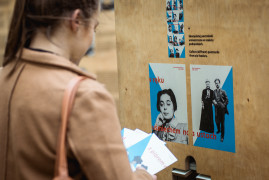
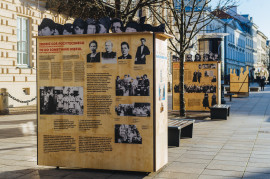
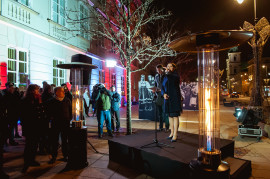
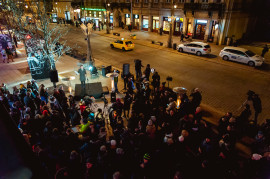
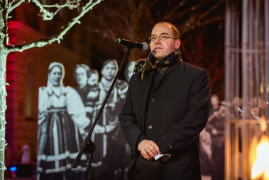
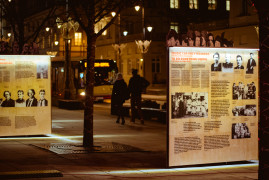
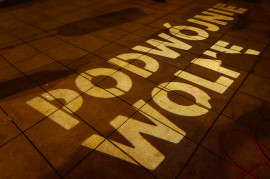
Vernissage [28 November 2018]
Stanisława Paleolog, Wanda Gertz, Maria Kretkowska, Aleksandra Szczerbińska, Maria Dulębianka, Maria Konopnicka, Paulina Kuczalska-Reinschmit, and a great many others – each could have been the protagonist of a present-day historical film or serial. But while most have been forgotten, we should keep in mind that their achievements and life stories form part of the democratic, modern history of Poland.
The exhibition premiered on 28 November 2018 in Warsaw, and one of those present at the event was the author of its concept, Professor Magdalena Gawin, the Deputy Minister of Culture and National Heritage. Since then, “Liberated Twice” has been seen in nine cities across Poland: Łódź, Ostrów Mazowiecka, Kraków, Białystok, Środa Wielkopolska, Katowice, Cieszyn, Wrocław and Kielce. Plans for an international exhibition route are currently being drawn up by the Pilecki Institute in collaboration with the Ministry of Foreign Affairs, and “Liberated twice” has already been viewed in Vilnius (on 14 May 2019).
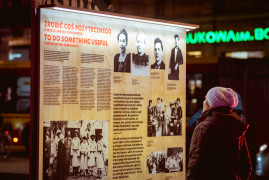
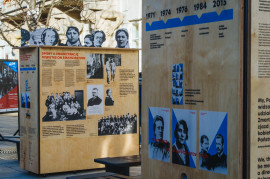
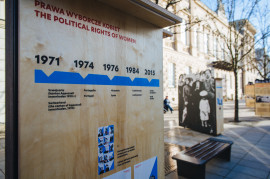
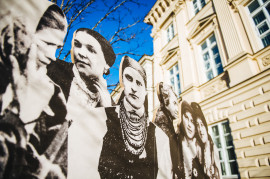
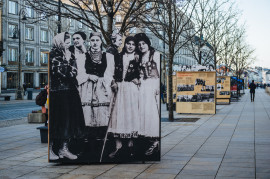

Exhibition concept: Prof. Magdalena Gawin
Curatorial cooperation: Hanna Radziejowska
Design: zespół wespół
Project execution: Pracownia Tryktrak
See also
- Call for Papers | Exile Governments and Political Refugees in 20th-Century Europe: Sovereignty in the Face of Totalitarianisms (Deadline: November 15)
conference
Call for Papers | Exile Governments and Political Refugees in 20th-Century Europe: Sovereignty in the Face of Totalitarianisms (Deadline: November 15)
The year 2027 marks the 85th anniversary of the signing, on 13 January 1942, of the Declaration of St James’s Palace on the Punishment of War Crimes. To commemorate this landmark event, we are organising an international academic conference addressing the history and significance of governments in exile and political refugees in 20th-century Europe.
- Conference “Shared Experiences – Different Paths? The Turning Point of 1956 and Its Significance for the Countries and Societies of East Central Europe”
conference
Conference “Shared Experiences – Different Paths? The Turning Point of 1956 and Its Significance for the Countries and Societies of East Central Europe”
The Pilecki Institute and the Tadeusz Manteuffel Institute of History of the Polish Academy of Sciences invite you to participate in an international academic conference, Shared Experiences – Different Paths? The Turning Point of 1956 and Its Significance for the Countries and Societies of East Central Europe, which will be held on 19–21 October 2026 in Warsaw. The event is part of a series of conferences devoted to the history of transformations in East Central Europe after 1945.
- New Jork | The Augustów Roundup – the largest Soviet crime committed against Polish citizens after World War II. Workshops and Presentations
Event
New Jork | The Augustów Roundup – the largest Soviet crime committed against Polish citizens after World War II. Workshops and Presentations
Learn the history of the Augustów Roundup, a Soviet operation carried out in July 1945 that resulted in the arrest and disappearance of hundreds of people.